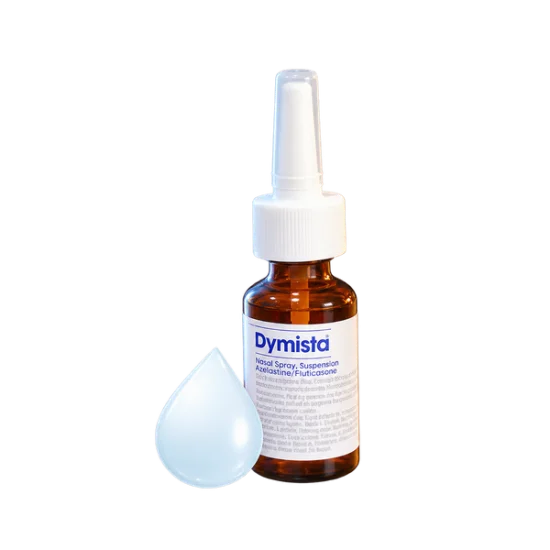
Dymista
Active ingredient: Azelastine, Fluticasone propionate
Delivery: from 4 days
- Worldwide Delivery4-7 business days
- Quality GuaranteedOnly original products
- Bonus pillsSave up to 80%
- 24/7 SupportOur team of pharmacists is available 24/7 to help you
Dymista combines fluticasone propionate, a corticosteroid, with azelastine hydrochloride, an antihistamine, to relieve moderate-to-severe allergic rhinitis. Dymista Nasal Spray targets blocked and runny nose, sneezing, and nasal itching when one treatment alone does not provide enough relief.
Product information
Dymista Nasal Spray targets blocked and runny nose, sneezing, and nasal itching when one treatment alone does not provide enough relief.
Dymista is a combined nasal treatment for allergic rhinitis, also called hay fever when seasonal allergens are responsible. Dymista Nasal Spray is listed within the Allergy & Sinus treatment category and addresses several symptoms at the same time.
How it affects the body
Fluticasone propionate reduces inflammatory activity in the nasal mucosa, decreasing swelling, mucus production, and sensitivity to airborne allergens. Azelastine hydrochloride blocks histamine receptors in the nasal tissues, helping reduce sneezing, itching, and watery discharge.
Ingredients
Dymista contains two active substances: fluticasone propionate and azelastine hydrochloride. Fluticasone propionate is a corticosteroid, meaning an anti-inflammatory medicine that reduces several processes involved in allergic nasal swelling. Azelastine hydrochloride is an antihistamine that blocks the effects of histamine, a chemical involved in sneezing, itching, and watery discharge.
The two ingredients cover different parts of the allergic response.
Fluticasone Propionate Action
Fluticasone propionate reduces inflammatory activity in the nasal mucosa. This can decrease swelling, mucus production, and sensitivity to airborne allergens. Its main action is local inside the nose, though excessive exposure or prolonged corticosteroid use can still produce clinically relevant effects.
Nasal corticosteroids usually require regular use. They are not intended to provide a permanent change in the underlying allergy.
Azelastine Hydrochloride Action
Azelastine hydrochloride blocks histamine receptors in the nasal tissues. This helps reduce rapid allergy symptoms such as sneezing, itching, and watery discharge.
Azelastine can cause a bitter taste if spray drains into the throat. Drowsiness is also possible, although many people do not experience it.
Dosage and administration
The labelled strength is 137 micrograms of azelastine hydrochloride plus 50 micrograms of fluticasone propionate in each actuation. An actuation means one measured pump spray.
Dosing differs between strengths and between users, so there is no single amount that suits everyone. The usual labelled regimen for adults and adolescents within the approved age range is:
- One spray into each nostril twice daily.
- Use by nasal administration only.
- Keep the dosing schedule consistent during the treatment period.
- Do not use extra sprays to compensate for persistent symptoms.
- Reassess treatment if symptoms remain uncontrolled despite correct administration.
Dymista is not intended for swallowing or application to the eyes. The approved age range and local instructions should follow the UAE product information applicable to the prescribed product.
Missed Dose and Excess Use
If a dose is missed, use it when remembered unless the next scheduled dose is close. In that situation, skip the missed dose and return to the regular schedule. Do not double the number of sprays.
Using more than directed can increase exposure to azelastine or fluticasone propionate. Suspected excessive use with marked drowsiness, unusual weakness, visual symptoms, breathing difficulty, or severe irritation requires urgent medical advice.
A single spray does not always provide complete symptom control. Dymista works best when used with the prescribed regularity rather than only during the worst few minutes of an allergy flare.
Dymista Nasal Spray Administration Technique
Correct technique helps the medicine remain inside the nasal passages instead of running into the throat. Use the spray in the following sequence:
- Gently clear the nose without forceful blowing.
- Shake the bottle if required by the product instructions.
- Prime the pump before first use until it produces a fine, even mist.
- Re-prime after a prolonged period without use according to the product instructions.
- Keep the head slightly forward.
- Close one nostril with a finger.
- Place the nozzle into the other nostril without pushing it deeply.
- Aim slightly outward, away from the nasal septum.
- Press the pump while breathing in gently through the nose.
- Breathe out through the mouth.
- Repeat on the other side if prescribed.
- Wipe the nozzle and replace the protective cap.
Preparation Before Each Dose
The pump requires priming when it is new and may require additional preparation after it has not been used for the period specified in the product instructions. Priming releases air from the pump and helps deliver a measured spray.
Do not try to unblock the nozzle with a pin or sharp object. This can damage the pump and alter the spray pattern.
Correct Nasal Positioning
Forceful sniffing after spraying can pull the medicine into the throat. That increases the chance of bitter taste and may reduce how much remains on the nasal lining.
Gentle inhalation is enough.
Cleaning should involve wiping the nozzle with clean tissue and following the product’s cleaning procedure when a blockage develops. Do not immerse the pump in water unless the official instructions specifically allow that method.
When not to use it
Dymista is not suitable for everyone. This medication is not for you if you have had a serious allergic reaction to azelastine, fluticasone propionate, or another component of the prescribed product.
A clinical review is needed before use in the following situations:
- Recent nasal surgery or significant nasal injury
- Active nasal sores or unexplained recurrent bleeding
- Glaucoma or cataracts
- Untreated nasal, respiratory, or systemic infection
- Tuberculosis, especially if untreated
- Previous strong reactions to corticosteroids
- Use of several corticosteroid products at the same time
Medical Conditions Requiring Review
Nasal corticosteroids can delay healing in damaged nasal tissue. Recent surgery or trauma may therefore change when treatment should begin.
People with glaucoma or cataracts may need eye monitoring if corticosteroid exposure is prolonged or combined with other steroid treatment. New blurred vision, eye pain, or halos around lights requires prompt assessment.
Medicine and Substance Interactions
Strong CYP3A4 inhibitors can increase exposure to fluticasone propionate. Examples include some medicines used for fungal infections and certain antiviral treatments. The full medicine list matters, including inhalers, creams, tablets, over-the-counter products, and supplements.
Sedatives, sleep medicines, opioid pain medicines, and alcohol may increase drowsiness from azelastine. This does not create the same level of risk for every user, but combining them requires caution.
Do not add another corticosteroid nasal spray without a clear treatment plan. Duplicate steroid exposure can increase local and systemic adverse effects without improving symptom control.
Pregnancy, Breastfeeding and Children
Children should use Dymista only within the age range approved for the relevant product information. A child with frequent nosebleeds, poor growth, visual symptoms, or repeated need for nasal steroids needs clinical review.
When this is not for you
This medication is not for you if you have had a serious allergic reaction to azelastine, fluticasone propionate, or another component of the prescribed product. Speak with a clinician before use if you recently had nasal surgery or an injury, have sores or repeated bleeding in the nose, glaucoma or cataracts, an untreated infection, tuberculosis, or are already using several corticosteroid products.
Possible side effects
Common practical problems include bitter taste, headache, sneezing, nasal irritation, and nosebleeds. These effects are often related to spray technique or local contact with the nasal lining.
Common Nasal and Taste Effects
Nosebleeds can occur when the spray repeatedly contacts the septum or when the nasal lining is already dry and inflamed. A bitter taste is more likely when the user sniffs forcefully or sprays with the head tilted backwards.
Mild irritation may improve after the technique is corrected. Recurrent bleeding, crusting, sores, or worsening pain needs medical review.
Serious Reactions Requiring Medical Help
Stop using Dymista and seek urgent medical help for:
- Swelling of the face, lips, tongue, or throat
- Difficulty breathing or wheezing
- Faintness associated with an allergic reaction
- Sudden vision changes or eye pain
- Severe or persistent nasal sores
- Heavy or repeated nosebleeds
- Severe facial pain with fever or rapidly worsening symptoms
Corticosteroid-related effects are less common with local nasal treatment than with prolonged systemic corticosteroid use, yet risk can increase with high exposure, several corticosteroid products, or medicines that slow fluticasone breakdown.
Therapeutic indications
Dymista is a combined nasal treatment for allergic rhinitis, also called hay fever when seasonal allergens are responsible. Allergic rhinitis is inflammation inside the nose triggered by airborne substances such as pollen, dust mites, or animal dander. Dymista Nasal Spray is listed within the Allergy & Sinus treatment category and addresses several symptoms at the same time.
Symptoms Addressed by Dymista
Dymista may help relieve:
- Nasal blockage and congestion
- Repeated sneezing
- Nasal itching
- Watery nasal discharge
- Inflammation of the nasal lining
- Allergy-related irritation inside the nose
Fever, marked facial pain, swelling around the eyes, or thick discoloured mucus can point to a problem other than uncomplicated allergic rhinitis. Those symptoms need clinical assessment rather than repeated escalation of an allergy spray.
Dymista does not treat every cause of nasal congestion. Viral infections, bacterial sinusitis, nasal polyps, structural blockage, and medication-related irritation require different assessment and management.
Appropriate Treatment Context
Dymista may be selected when symptoms remain troublesome with a single nasal treatment. The combined formulation provides both anti-inflammatory corticosteroid activity and antihistamine activity in one spray.
A clinician or pharmacist may consider the symptom pattern, previous treatment response, nasal examination, age, and concurrent medicines before recommending continued use.
Comparison
Dymista Compared with Separate Nasal Sprays
Dymista combines two active substances in one nasal spray. Separate single-ingredient sprays provide either anti-inflammatory corticosteroid treatment or antihistamine treatment, depending on the selected product.
| Treatment type | Main pharmacological role | Practical limitation |
|---|---|---|
| Dymista | Fluticasone propionate plus azelastine hydrochloride | Combines two medicines but may cause bitter taste or drowsiness |
| Fluticasone propionate nasal spray | Corticosteroid anti-inflammatory action | Does not provide direct antihistamine receptor blockade |
| Azelastine hydrochloride nasal spray | Antihistamine action | Does not provide the same corticosteroid anti-inflammatory coverage |
Fluticasone is often useful when swelling and persistent congestion dominate. Azelastine may be useful when sneezing, itching, and watery discharge are prominent. Dymista may be selected when symptoms remain troublesome with one active substance alone.
Combination treatment is not automatically better for every person. A single ingredient may be sufficient for milder symptoms and may reduce exposure to an unnecessary second active substance.
Common mistakes
Common Patient Mistakes
The most frequent mistake is treating Dymista like a quick decongestant. It is designed for allergic inflammation and should not be used as an unrestricted replacement for emergency treatment of severe breathing difficulty.
Patients also sometimes use two nasal steroid products together, believing that different brand names mean different drug classes. Fluticasone exposure can add up across products.
A further mistake is stopping after one good day and restarting only when symptoms return. This irregular pattern may provide less control than the prescribed schedule.
Do not ignore unilateral bleeding, persistent crusting, eye symptoms, or facial pain. Those signs need review because they may not represent ordinary allergic rhinitis.
Administration Errors That Reduce Benefit
Common mistakes include:
- Spraying directly onto the nasal septum
- Tilting the head backwards
- Sniffing forcefully after spraying
- Failing to prime a new pump
- Using a blocked or damaged nozzle
- Doubling the next dose after forgetting one
- Stopping treatment too early because improvement is gradual
- Continuing through repeated nosebleeds without review
One practical detail is easy to miss: a blocked nozzle may produce an uneven stream instead of a fine mist. Wiping the nozzle as directed helps preserve the intended spray pattern.
Another common problem is using Dymista alongside an inhaled, oral, injected, or topical corticosteroid without telling the prescriber. The combined exposure may matter even when each product is used correctly.
When Persistent Symptoms Need Review
Persistent congestion may reflect uncontrolled allergy, an infection, structural narrowing, nasal polyps, medication irritation, or incorrect technique. Thick mucus, fever, facial pain, or one-sided blockage deserves assessment rather than repeated extra sprays.
A pharmacist or doctor would usually review the administration technique, treatment duration, other corticosteroid products, antihistamines, sedatives, recent nasal injury, and the pattern of symptoms.

What doctors say
Doctor Perspectives
Doctors generally expect Dymista to be used consistently during the period of exposure to the relevant allergens. The strongest benefit may be limited if the spray is used only after congestion has become severe.
The combination has a clear clinical trade-off: it covers both inflammation and histamine-related symptoms, but it can produce more practical nuisance effects than a single-ingredient spray. Bitter taste, drowsiness, nasal irritation, and nosebleeds should be discussed rather than ignored. The choice should reflect symptom severity and treatment response. Correct technique can reduce local irritation. Persistent symptoms warrant review rather than unsupervised dose increases.
The World Health Organization describes allergic rhinitis as a common inflammatory airway condition in which accurate diagnosis and appropriate medicine selection are central to symptom control [1]. For Dymista, correct nasal direction and gentle breathing are as important as the number of sprays.
Common questions
What should be discussed before starting Dymista?
Tell the clinician or pharmacist about nasal surgery, nasal injury, repeated nosebleeds, glaucoma, cataracts, tuberculosis, untreated infection, and any previous corticosteroid reaction. Provide a complete list of prescribed medicines, inhalers, creams, supplements, sedatives, and alcohol use. The 2024 MOHAP guidance and the UAE product information should guide the locally applicable age range and treatment instructions. This review is especially important when a strong CYP3A4 inhibitor or another corticosteroid is already being used.
Do you offer anonymous delivery?
Your order will be securely packed and shipped within 24 hours. This is exactly what your package will look like (images of an actual item sent). It has the size and look of a regular private letter (24x11x0.7 cm) and its contents cannot be seen.
Comparison
Sources
- World Health Organization (2023). Allergic rhinitis and related upper-airway allergy information