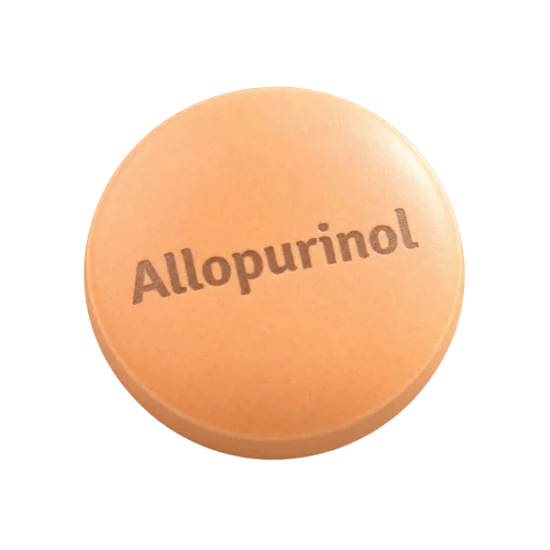
Allopurinol
Active ingredient: Allopurinol
Delivery: from 4 days
- Worldwide Delivery4-7 business days
- Quality GuaranteedOnly original products
- Bonus pillsSave up to 80%
- 24/7 SupportOur team of pharmacists is available 24/7 to help you
Allopurinol lowers uric acid production for people with chronic gout, clinically significant hyperuricaemia, or selected uric-acid kidney conditions. It helps prevent future attacks but does not provide rapid relief during an acute gout flare.
Product information
Allopurinol is a long-term uric-acid-lowering treatment and a xanthine oxidase inhibitor. It is used when persistent hyperuricaemia contributes to chronic gout, recurrent attacks, uric-acid kidney stones, or other clinically significant urate-related problems. Treatment decisions depend on gout history, serum uric acid, kidney function, current medicines, and the reason for treatment.
Active Ingredient and Pharmacological Class
The active ingredient is allopurinol. It belongs to the xanthine oxidase inhibitor class, which reduces the body’s production of uric acid rather than removing urate directly through the urine.
Long-Term Uric Acid Control
Hyperuricaemia means that uric acid is elevated in the blood. When levels remain high, urate crystals can form in joints and tissues, contributing to gout attacks and, in some patients, kidney stones. Allopurinol is preventive treatment; it is not a fast-acting painkiller for an attack already underway.
How it affects the body
Allopurinol reduces uric acid production by inhibiting xanthine oxidase, an enzyme involved in the final stages of purine metabolism. This lowers the amount of urate available to form crystals.
Xanthine Oxidase and Purine Breakdown
Purines are natural compounds found in human cells and some foods. Their breakdown follows a simple sequence:
- Hypoxanthine is converted into xanthine.
- Xanthine is converted into uric acid.
- Xanthine oxidase drives both final conversion steps.
- Allopurinol inhibits xanthine oxidase.
- Less uric acid is produced.
The medicine does not stop all uric acid production. It reduces the enzyme-driven pathway, allowing serum uric acid and, in suitable patients, urinary uric acid to decrease over time. The UK Medicines and Healthcare products Regulatory Agency (MHRA) product information describes allopurinol’s pharmacological action through inhibition of this pathway [1].
Uric Acid and Urate Crystallisation
Uric acid circulates in the blood in a balance with urate. When urate concentration stays too high, crystals may develop in joints. These crystals activate inflammation and cause the pain, redness, warmth, and swelling associated with gout.
Lowering uric acid takes time. Existing uric acid crystals do not disappear immediately after the first tablets, which explains why symptom relief and biochemical control can follow different timetables.
Ingredients
The active ingredient is allopurinol. It belongs to the xanthine oxidase inhibitor class, which reduces the body’s production of uric acid rather than removing urate directly through the urine.
Dosage and administration
The regimen for the selected strength must be confirmed with a healthcare professional before starting. Allopurinol tablets are taken by mouth, with water, according to the prescribed schedule.
- Take the tablets at the same time each day when possible.
- Follow the prescribed strength and frequency.
- Do not increase the dose because a flare has occurred.
- Do not stop treatment after the first improvement unless the prescriber instructs you to stop.
- If a dose is missed, take it when remembered unless the next dose is near; never double the next dose.
- Dose changes should follow serum uric acid results, kidney function, and tolerability rather than day-to-day pain alone.
Low-Start and Treat-to-Target Principles
Clinicians commonly begin with a lower regimen and adjust it gradually. The maintenance plan depends on serum uric acid, estimated kidney function, age, other illnesses, and interacting medicines. The target is individualised.
Older adults and people with impaired kidney function may need slower adjustment. The FDA prescribing information emphasises dose selection according to renal function and clinical response [2].
Daily Administration and Missed Doses
Take each tablet with water. Food-related directions can vary by the prescribed product instructions, so use the directions provided for your specific regimen rather than changing administration independently.
If one dose is missed, take it when remembered unless the next scheduled dose is close. Skipping the missed dose is safer than taking two doses together. Accidental double dosing should prompt timely medical advice, especially when kidney function is reduced.
When not to use it
Allopurinol is not suitable for people with a previous serious reaction to allopurinol. Extra care is required with kidney disease, liver disease, pregnancy, breastfeeding, older age, and medicines that affect renal clearance or purine metabolism.
High-Risk Drug Interactions
Important interaction checks include:
- Azathioprine and mercaptopurine, because allopurinol can greatly increase their effects and toxicity.
- Warfarin, because anticoagulant response may change.
- Certain antibiotics, including ampicillin or amoxicillin, which may increase the likelihood of rash.
- Diuretics, especially when kidney function is reduced.
- Other medicines that affect renal function or uric acid metabolism.
When this is not for you
you have had a serious hypersensitivity reaction to allopurinol or cannot complete the required monitoring plan.
Possible side effects
Allopurinol can cause mild gastrointestinal symptoms, skin reactions, liver-test abnormalities, and rare severe hypersensitivity reactions. A new rash is the central warning sign.
| Usually reported effects | Urgent warning signs |
|---|---|
| Nausea, vomiting, or diarrhoea | New rash with fever or facial swelling |
| Mild stomach discomfort | Blisters, peeling skin, or mouth and eye sores |
| Abnormal liver enzymes found on testing | Breathing difficulty, yellow skin, or dark urine |
Common Tolerability Effects
Nausea, vomiting, and diarrhoea may occur. Persistent vomiting or diarrhoea can cause dehydration, which is more concerning in people with kidney disease. Severe or continuing gastrointestinal symptoms require medical review.
Do not assume that every skin change is harmless. A new rash after starting allopurinol deserves prompt attention, even when it appears small.
Rash and Severe Hypersensitivity
Stop taking further doses and seek urgent medical advice if a rash develops, unless emergency clinicians give different instructions. Emergency assessment is needed for:
- Rash with fever.
- Facial, lip, tongue, or throat swelling.
- Blisters or skin peeling.
- Sores in the mouth, eyes, or genitals.
- Breathing difficulty.
- Marked weakness or widespread skin tenderness.
Severe hypersensitivity reactions can affect the skin, liver, kidneys, and other organs. The WHO and international pharmacogenetic guidance recognise HLA-B*58:01 as a genetic risk marker in selected populations; testing may be considered in some clinical settings before treatment.
Liver Enzyme Changes
Blood tests may show raised liver enzymes. Yellowing of the skin or eyes, dark urine, pale stools, severe fatigue, or persistent upper-abdominal discomfort requires prompt assessment.

Therapeutic indications
Allopurinol is used for selected patients with gout, recurrent gout associated with elevated uric acid, uric-acid kidney stones, and uric acid nephropathy. It may also be used in specialist-directed care when cancer therapy creates a high risk of rapid hyperuricaemia.
| Clinical situation | Treatment purpose | Usual role |
|---|---|---|
| Chronic or recurrent gout | Reduce uric acid and prevent future attacks | Long-term prevention |
| Uric-acid kidney stones | Lower uric acid available for stone formation | Individualised preventive treatment |
| Cancer therapy with rapid uric acid rise | Reduce urate-related complications | Specialist-directed care |
Chronic Gout and Recurrent Gout Attacks
Urate crystallisation causes gout attacks. Allopurinol reduces the supply of uric acid that maintains these deposits, helping lower the risk of future attacks when treatment reaches its intended biochemical target.
A single high uric acid result does not automatically mean that treatment is required. Asymptomatic hyperuricaemia needs clinical assessment, especially when kidney disease, cardiovascular disease, or other medicines are involved.
Uric Acid Kidney Stones and Nephropathy
Allopurinol may be considered when uric acid contributes to recurrent kidney stones or uric acid nephropathy. Hydration can support urinary health when it is medically suitable, but people with heart failure, advanced kidney disease, or fluid restrictions need individual guidance rather than a fixed fluid target.
Hyperuricaemia Associated With Cancer Therapy
Cancer therapy can cause rapid cell breakdown and a sharp rise in uric acid. This situation may require urgent specialist protocols, laboratory monitoring, and hospital-based care. Allopurinol should not be self-started for suspected tumour lysis risk.
Comparison
Allopurinol reduces uric acid production through xanthine oxidase inhibition. Other treatment approaches act differently, and the choice depends on kidney function, cardiovascular history, interactions, previous reactions, stone history, and local clinical guidance.
| Treatment approach | Main mechanism | Key limitation |
|---|---|---|
| Allopurinol | Reduces uric acid production by inhibiting xanthine oxidase | Requires gradual individual adjustment and interaction review |
| Febuxostat | Also inhibits xanthine oxidase | Choice may be influenced by cardiovascular history and prior treatment response |
| Uricosuric treatment | Increases urinary uric acid excretion | May be unsuitable with recurrent uric-acid stones or certain kidney problems |
Allopurinol and Febuxostat
Both allopurinol and febuxostat reduce uric acid production, but they have different prescribing considerations. Allopurinol is commonly selected for long-term urate lowering, while febuxostat may be considered when response or tolerability is inadequate.
Neither option is universally best. The decision should account for cardiovascular history, kidney function, prior rash, interactions, and the treatment goal.
Uricosuric Treatment Principles
Uricosuric approaches increase urinary uric acid excretion. Allopurinol works upstream by reducing production instead. This distinction matters when a patient has kidney stones, reduced kidney function, or high urinary uric acid.
Common mistakes
Avoid these errors:
- Stopping allopurinol after the first pain-free period.
- Doubling the next dose after forgetting one tablet.
- Increasing the regimen because a flare occurs.
- Treating a new rash as ordinary irritation.
- Assuming that allopurinol provides immediate relief during acute gout.
- Missing blood tests after a dose adjustment.
- Failing to mention diuretics, anticoagulants, antibiotics, or cancer medicines.
- Using a fixed hydration target despite heart or kidney disease.
What doctors say
Clinically, allopurinol is a long-term treatment that works by lowering uric acid production, so consistent daily use is important for preventing future gout attacks and other urate-related problems. Patients should consult a physician before starting or changing treatment, and seek medical advice if symptoms worsen or concerns arise.
Common questions
What should I do if Allopurinol does not produce the expected result?
Allow time for laboratory assessment and do not increase the regimen independently. NICE guidance on gout management, updated in 2022, supports adjusting urate-lowering treatment according to serum uric acid and clinical response rather than symptoms alone [3]. A clinician should review adherence, kidney function, interacting medicines, the treatment goal, and whether the symptoms are caused by gout.
How long does an Allopurinol course last, and is long-term use acceptable?
Allopurinol is often used as continuing preventive treatment when recurrent gout or another ongoing urate problem is present. The appropriate duration depends on the underlying condition, treatment response, kidney function, and attack history. NICE guidance from 2022 supports long-term urate-lowering treatment when clinically indicated, with follow-up based on individual response.
Which condition rules out Allopurinol?
A previous serious hypersensitivity reaction to allopurinol rules it out. The FDA prescribing information reviewed in 2025 also highlights the need for caution with renal impairment and interacting medicines. A new rash after starting treatment requires urgent medical advice before further doses are taken.
Which symptoms mean I should stop Allopurinol and seek urgent help?
Stop further doses and seek urgent medical assessment for a new rash, fever, facial swelling, blisters, peeling skin, mouth or eye sores, or breathing difficulty. The MHRA product information (2023) identifies severe skin and hypersensitivity reactions as important safety concerns. Yellow skin, dark urine, severe fatigue, or widespread skin tenderness also require prompt assessment.
How soon does the effect of Allopurinol become noticeable?
Allopurinol begins reducing uric acid production after treatment starts, but prevention of gout attacks develops over time. The 2022 NICE guidance recommends judging treatment through serum uric acid monitoring and clinical history rather than expecting immediate pain relief. Early flares can occur while urate levels and crystal deposits are changing.
What should I do after a missed Allopurinol dose?
Take the missed dose when remembered unless the next scheduled dose is near. If the next dose is close, skip the missed dose and resume the usual schedule; do not take two doses together. The FDA prescribing information reviewed in 2025 supports avoiding unsupervised dose changes, especially when kidney function is reduced.
Do you offer anonymous delivery?
Your order will be securely packed and shipped within 24 hours. This is exactly what your package will look like (images of an actual item sent). It has the size and look of a regular private letter (24x11x0.7 cm) and its contents cannot be seen.
Comparison
Sources
- UK Medicines and Healthcare products Regulatory Agency (MHRA) (2023). Allopurinol: Summary of Product Characteristics (SmPC)
- U.S. Food and Drug Administration (2025). Zyloprim (allopurinol) Prescribing Information
- National Institute for Health and Care Excellence (2022). Gout: Diagnosis and Management (NG219)