Skip to content
Tenormin

Tenormin

Active ingredient: Atenolol

Dosage
Package
Package
Package

AED 314.42

AED 453.72 AED 628.84 Save 28%

AED 417.90 AED 1,257.68 Save 67%

AED 521.38 AED 1,886.52 Save 72%

AED 831.82 AED 3,144.20 Save 74%

AED 1,353.20 AED 7,860.50 Save 83%

AED 310.44

AED 390.04 AED 620.88 Save 37%

AED 429.84 AED 1,241.76 Save 65%

AED 553.22 AED 1,862.64 Save 70%

AED 871.62 AED 3,104.40 Save 72%

AED 1,229.82 AED 7,761.00 Save 84%

AED 2,308.40

AED 1,615.88 AED 4,616.80 Save 65%

AED 1,074.60 AED 9,233.60 Save 88%

AED 991.02 AED 13,850.40 Save 93%

AED 744.26 AED 23,084.00 Save 97%

AED 577.10 AED 57,710.00 Save 99%

Free delivery on orders from AED 796.00, free express delivery from AED 1,194.00

Delivery: from 4 days

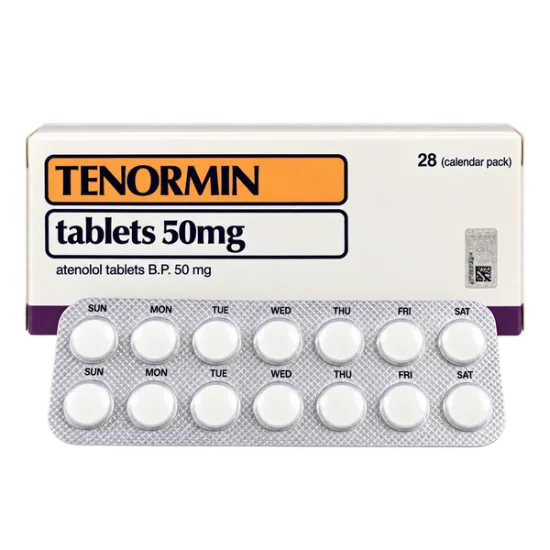
Patients with hypertension, angina, or selected heart-rhythm disorders may be prescribed Tenormin. It contains atenolol, a cardioselective beta1-blocker that slows the heart and reduces cardiac workload.

Product information

Tenormin contains atenolol, a competitive cardioselective beta1-blocker. The product described here is supplied as tablets. Dosing differs between strengths and between users, so there is no single amount that suits everyone. Atenolol acts mainly on beta1 receptors in the heart, although this selectivity is not absolute at higher exposure.

How it affects the body

Beta1 receptors are signalling sites found mainly in cardiac tissue. Adrenaline normally stimulates these receptors, increasing heart rate, contraction strength, and electrical conduction.

Atenolol blocks this stimulation. The result can include:

  • A slower resting and exercise-related pulse
  • Reduced force of cardiac contraction
  • Lower cardiac output
  • Less stress on the artery walls
  • Lower oxygen demand in the heart muscle

That mechanism explains why Tenormin can help control blood pressure and reduce angina episodes. It also explains why pulse monitoring matters. A lower pulse may be an intended treatment effect, while an unusually slow pulse accompanied by fainting, marked weakness, confusion, or breathlessness needs prompt medical assessment.

Atenolol does not remove the underlying cause of coronary artery disease. It controls important cardiovascular responses. The FDA prescribing information describes atenolol as a beta-adrenergic blocking agent used in hypertension, angina pectoris, and selected cardiac conditions [1]. Clinical response still requires assessment of symptoms and vital signs. Treatment decisions should remain with the prescribing clinician.

Ingredients

Tenormin contains atenolol, a competitive cardioselective beta1-blocker. The product described here is supplied as tablets. Dosing differs between strengths and between users, so there is no single amount that suits everyone. Atenolol acts mainly on beta1 receptors in the heart, although this selectivity is not absolute at higher exposure.

Dosage and administration

The amount of atenolol in each Tenormin tablet and the appropriate regimen can differ between strengths and between users, so there is no single amount that suits everyone. The correct daily amount differs between patients and depends on the condition being treated, the response to therapy, pulse rate, blood pressure, and kidney function.

Tenormin tablets are taken by mouth. A prescriber may use a different strength or schedule in another clinical situation, so tablets should not be exchanged between patients or adjusted independently.

The practical prescribing principles are:

  • Take the prescribed amount at the prescribed frequency.
  • Take it at a consistent time each day.
  • Swallow the tablet with water.
  • Keep the dosing schedule steady unless the prescriber changes it.
  • Do not alter the dose solely because one home blood-pressure reading is higher or lower than usual.
  • Kidney impairment may require a lower total exposure or a longer interval between doses.

The UAE Ministry of Health and Prevention, known as MOHAP, recognises kidney function and cardiovascular status as relevant factors when medicines require individual prescribing decisions. Prescription instructions take priority over general dosing information.

Take Tenormin exactly according to the prescribed schedule. It is commonly administered once daily, although the appropriate regimen depends on the clinical indication and the prescriber’s assessment.

If a dose is missed, take it when remembered unless the next scheduled dose is close. In that situation, skip the missed dose and return to the usual schedule. Never take two doses together to compensate.

A phone reminder linked to a regular daily activity, such as breakfast or brushing your teeth, can reduce missed doses. Keep the routine consistent even when blood pressure readings improve.

Atenolol treatment should not be stopped suddenly. Abrupt discontinuation can cause rebound tachycardia, a rise in blood pressure, worsening angina, or serious cardiac complications, especially in people with coronary artery disease.

If treatment needs to end, the prescriber normally reduces it in a controlled manner. Feeling well does not prove that hypertension or coronary disease has resolved.

When not to use it

Tenormin is not suitable for everyone. Medical review is needed before treatment in people with:

  • Severe bradycardia
  • Certain heart blocks or conduction disorders
  • Cardiogenic shock
  • Uncontrolled heart failure
  • Very low blood pressure
  • Asthma or previous bronchospasm
  • Peripheral circulation problems
  • Diabetes or recurrent low blood glucose
  • Reduced kidney function
  • Pregnancy or breastfeeding

Atenolol is cleared substantially through the kidneys. Reduced renal function can increase exposure and may change the required regimen. Kidney disease should be disclosed before treatment begins.

Beta-blockers can mask some signs of hypoglycaemia, including a fast heartbeat. Sweating, confusion, unusual weakness, and behavioural changes can still occur and require attention.

Pregnancy and breastfeeding require an individual risk assessment. The EMA advises that cardiovascular medicines during pregnancy should be selected according to the mother’s condition, fetal considerations, and available alternatives [2].

Tell the surgical team and anaesthetist about Tenormin before an operation. Beta-blockade can affect heart rate and blood pressure during anaesthesia, and sudden withdrawal before surgery can also create risk.

When this is not for you

This medicine is not for you if you have a known serious reaction to atenolol, severe untreated conduction disease, cardiogenic shock, or a clinically significant slow pulse unless a specialist has established a specific treatment plan.

Possible side effects

Tiredness, dizziness, cold hands or feet, and a slower pulse are recognised effects of beta-blockade. These effects may be mild and may lessen as the body adjusts, although persistent or troublesome symptoms require clinical review.

More common effects Urgent warning signs
Fatigue, dizziness, cold extremities, slower pulse Fainting, severe weakness, very slow pulse, or confusion
Reduced exercise tolerance or sleep disturbance Severe breathlessness, wheezing, or swelling
Nausea or other digestive discomfort New or worsening chest pain or signs of heart failure

Atenolol can make exercise feel different because the heart may not accelerate as quickly during exertion. This does not mean exercise is always prohibited, but activity should match the treatment plan and physical condition.

Seek urgent medical assessment for fainting, severe breathing difficulty, new chest pain, marked swelling, or a very slow pulse with weakness. Do not manage severe symptoms by simply skipping tablets.

If dizziness occurs, sit or lie down first. Record when it happened, the pulse if it can be measured safely, and whether the symptom followed standing, exercise, or the tablet dose.

People with asthma or other bronchospastic disease may experience breathing problems even though atenolol is cardioselective. Wheezing after treatment needs medical attention.

Therapeutic indications

Doctors prescribe Tenormin for conditions such as:

  • High blood pressure
  • Stable angina, where the heart muscle needs less oxygen
  • Selected tachyarrhythmias and other rhythm disturbances
  • Certain cardiovascular situations after clinical assessment

Atenolol is not suitable for every form of chest pain or irregular heartbeat. The diagnosis, resting pulse, blood pressure, kidney function, breathing history, and other medicines all affect the decision.

The medicine reduces the effect of adrenaline on the heart. That can lower the pulse and reduce the force of contraction.

Fatigue can be more noticeable during the first days after starting atenolol or after a dose increase. Rising slowly from a chair may reduce light-headedness.

Comparison

Tenormin belongs to one treatment class among several cardiovascular approaches. The best option depends on the diagnosis rather than on a single blood-pressure reading.

Treatment category Main cardiovascular effect and limitation
Atenolol and other beta-blockers Slow the heart and reduce cardiac workload; may cause fatigue, bradycardia, or breathing symptoms
Calcium channel blockers Relax arteries, and some also slow conduction; combination with atenolol may lower pulse excessively
ACE inhibitors Reduce a hormonal pathway that raises blood pressure; kidney function and potassium require monitoring

Other beta-blockers differ in receptor selectivity, tissue distribution, dosing schedules, and suitability for heart failure or respiratory disease. Calcium channel blockers are a broad group: amlodipine mainly relaxes arteries, while diltiazem and verapamil can also slow cardiac conduction. ACE inhibitors work through the renin–angiotensin system rather than by blocking beta1 receptors.

Treatment selection considers pulse, blood pressure, kidney function, asthma history, diabetes, angina, heart rhythm, and concurrent medicines. No class is preferable for every patient.

Common mistakes

One frequent mistake is judging treatment only by how the patient feels. Hypertension can remain present without symptoms, so feeling better does not confirm that the condition has disappeared.

Another mistake is treating a missed dose as an emergency. Taking two tablets can produce excessive beta-blockade, dizziness, or bradycardia.

Patients sometimes overlook kidney disease because they associate it only with urinary symptoms. Atenolol elimination depends substantially on renal function, so a history of chronic kidney disease, dialysis, or reduced kidney function matters even when urination seems normal.

Some people also forget to mention inhalers, decongestants, diabetes treatment, supplements, or medicines prescribed by another clinic. A complete medication list helps identify interactions before problems develop.

What doctors say

In clinical practice, doctors often judge atenolol by several measures together: symptom control, resting pulse, blood pressure, exercise tolerance, kidney function, and adverse effects. A lower pulse can be expected, but an excessively slow pulse with faintness is not a treatment goal.

Clinicians also look for medication patterns that explain dizziness. Tenormin combined with diltiazem, verapamil, amiodarone, clonidine, or another blood-pressure medicine can produce effects that are tolerable in one patient and excessive in another.

The practical message is simple: take the medicine consistently, record meaningful symptoms, and allow planned dose changes to be supervised. Angina, fainting, severe breathlessness, or new swelling deserves prompt assessment rather than self-directed withdrawal.

Common questions

How does Tenormin differ from other beta-blockers?

Tenormin contains atenolol, while other beta-blockers contain different active substances with different receptor selectivity and tissue distribution. Atenolol acts mainly at beta1 receptors in the heart and is cleared substantially through the kidneys. The FDA Tenormin prescribing information from 2011 describes atenolol’s cardiovascular actions and renal elimination as clinically relevant features .

Which habits support Tenormin treatment?

Taking the tablet at a consistent time, limiting activities that trigger symptoms, following the prescribed exercise plan, and recording blood pressure can support treatment. Excessive alcohol may worsen dizziness or low blood pressure, especially when treatment has just started. The WHO Global Report on Hypertension published in 2023 supports regular physical activity, reduced sodium intake, and avoidance of tobacco as part of blood-pressure care .

Can Tenormin be combined with other heart medicines?

It may be combined with another cardiovascular medicine when a clinician has selected the regimen and arranged monitoring. Diltiazem, verapamil, amiodarone, disopyramide, clonidine, reserpine, and other conduction-slowing medicines can increase the risk of bradycardia, low blood pressure, or conduction problems. The EMA guideline listed in source supports reviewing concurrent medicines before combining agents that affect cardiac conduction.

Which symptoms require urgent medical attention?

Fainting, severe breathlessness, wheezing, new chest pain, marked swelling, confusion, or a very slow pulse with weakness requires urgent medical assessment. These symptoms may indicate excessive bradycardia, bronchospasm, worsening heart failure, or another serious condition. NHS guidance on heart attack symptoms treats chest pain, severe breathing difficulty, and loss of consciousness as emergency symptoms [3].

Can the Tenormin tablet be split, crushed, or chewed?

Swallow the tablet with water unless the prescribing instructions specifically permit another method. Do not crush or chew it without confirmation that the particular tablet is suitable, because altering a tablet can affect how the dose is delivered or make accurate dosing harder. The FDA Tenormin prescribing information from 2011 describes oral tablet administration and supports following the prescribed administration method .

Do you offer anonymous delivery?

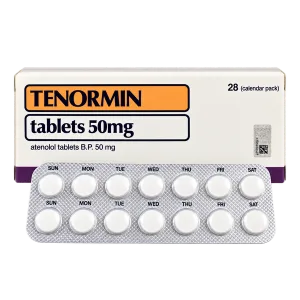
Your order will be securely packed and shipped within 24 hours. This is exactly what your package will look like (images of an actual item sent). It has the size and look of a regular private letter (24x11x0.7 cm) and its contents cannot be seen.

Comparison

Adalat

Active ingredient: Nifedipine
20mg 30mg 10mg
From AED 338.30
pills
4.1 (5)

Cozaar

Active ingredient: Losartan
25mg 50mg 100mg
From AED 163.18
pills
4.3 (4)

Prazosin

Active ingredient: Prazosin
5mg
From AED 469.64
pills
3.2 (3)

Tenormin Current

Active ingredient: Atenolol
100mg 50mg 25mg
From AED 310.44
pills
4.5 (4)

Comparison table: Hypertension

Sources

  1. U.S. Food and Drug Administration (2011). Tenormin (atenolol) Prescribing Information.
  2. European Medicines Agency (2017). Guideline on Clinical Investigation of Medicinal Products for the Treatment of Cardiac Failure.
  3. National Health Service (2025). Heart attack.

How Buyers Rate Tenormin

4.5 Based on 4 reviews
Hamza, 59 Al Ain The first week
16 Oct 2026
Rating: 3 out of 5
I used Tenormin for blood-pressure control and noticed that my pulse settled during the day. The first week brought more tiredness than I expected, especially after walking upstairs, so I recorded it and discussed it at my next review. The benefit was real, but the adjustment period took patience.
Khalid H., 67 Jumeirah The following weeks
28 Oct 2026
Rating: 5 out of 5
Tenormin made my heartbeat feel less forceful and my home readings became more consistent over the following weeks. I took the tablet at the same time each morning and found that routine easy to maintain. I was pleased with the result.
Saeed, 52 Khalifa City After the treatment settled
4 Nov 2026
Rating: 5 out of 5
I had been troubled by exertional chest tightness, and Tenormin reduced how often it interrupted my normal activities. I kept taking it on schedule and could walk more comfortably after the treatment settled. It gave me useful day-to-day control.
Ramon, 27 Al Reem Island By the following weeks
12 Nov 2026
Rating: 5 out of 5
Tenormin helped calm the fast heartbeat episodes that had been affecting my concentration. The improvement was gradual rather than immediate, but by the following weeks I felt more steady during ordinary activities. I was satisfied with the change.
Get our free app Shop faster and track your orders 4.0 · 268 reviews Install