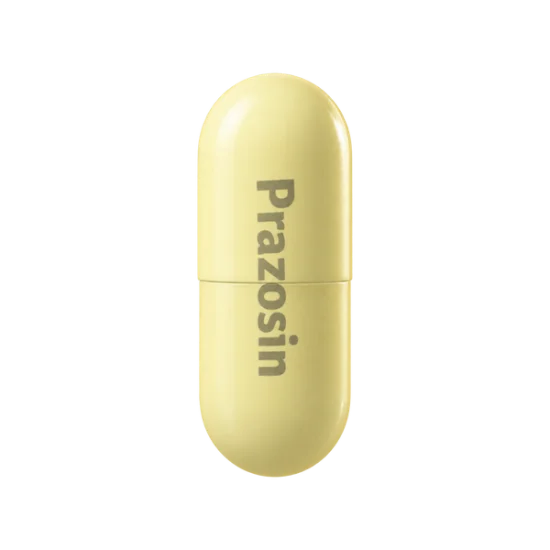
Prazosin
Active ingredient: Prazosin
Delivery: from 4 days
- Worldwide Delivery4-7 business days
- Quality GuaranteedOnly original products
- Bonus pillsSave up to 80%
- 24/7 SupportOur team of pharmacists is available 24/7 to help you
Prazosin is used for high blood pressure and, under clinician supervision, for trauma-related nightmares and sleep disruption. It contains prazosin, an alpha-1 adrenergic receptor antagonist that relaxes blood vessels and reduces excessive norepinephrine signalling. Dizziness and a blood-pressure drop after the first dose are important safety considerations.
Product information
Prazosin is an oral alpha-1 adrenergic receptor antagonist, also called an α1 antagonist. Its active substance is prazosin, commonly supplied as prazosin hydrochloride in capsule formulations. The medicine blocks alpha-1 receptors in vascular smooth muscle, allowing blood vessels to relax and reducing resistance to blood flow.
Alpha-1 receptors respond to norepinephrine, a chemical messenger involved in blood-vessel tightening and alertness. By reducing the effect of norepinephrine at these receptors, Prazosin can lower blood pressure. The same receptor activity explains its clinician-directed use for some trauma-related nightmares and nighttime hyperarousal.
Active ingredient and drug class
Prazosin belongs to the alpha-adrenergic blocker class. It is different from a conventional sedative because it does not work by broadly suppressing brain activity. Its main pharmacological action is selective blockade of alpha-1 receptors in blood vessels and, to some extent, the central nervous system.
Clinical role in blood pressure and sleep symptoms
How it affects the body
Prazosin is an α1 antagonist. It blocks alpha-1 adrenergic receptors instead of eliminating norepinephrine or stopping its production. Norepinephrine can still be present, but its ability to tighten blood vessels and intensify alpha-1 signalling is reduced.
Alpha-1 receptor blockade
Alpha-1 receptors act like signalling points on vascular smooth muscle. When norepinephrine activates them, the muscle contracts and the vessel narrows. Prazosin interrupts that signal, promoting vasodilation and lowering the pressure required to move blood through the circulation.
This explains both the desired blood-pressure effect and common problems such as dizziness or orthostatic hypotension. Orthostatic hypotension means that blood pressure falls after standing, causing light-headedness, blurred vision, weakness, or a feeling that the room is moving.
Central nervous system activity
The blood-brain barrier is a protective filter between circulating blood and brain tissue. Prazosin can reach central alpha-1 receptors, so it may reduce some effects of excessive adrenergic arousal during sleep. The proposed PTSD mechanism is biologically plausible, but clinical results are variable and do not support treating Prazosin as a universal sleep medicine.
Prazosin does not function like a sleeping tablet. Its benefit, when present, is linked to the pattern of nightmares and adrenergic arousal rather than simple sedation.
Ingredients
Prazosin is an oral alpha-1 adrenergic receptor antagonist, also called an α1 antagonist. Its active substance is prazosin, commonly supplied as prazosin hydrochloride in capsule formulations. The medicine blocks alpha-1 receptors in vascular smooth muscle, allowing blood vessels to relax and reducing resistance to blood flow.
Alpha-1 receptors respond to norepinephrine, a chemical messenger involved in blood-vessel tightening and alertness. By reducing the effect of norepinephrine at these receptors, Prazosin can lower blood pressure. The same receptor activity explains its clinician-directed use for some trauma-related nightmares and nighttime hyperarousal.
Active ingredient and drug class
Prazosin belongs to the alpha-adrenergic blocker class. It is different from a conventional sedative because it does not work by broadly suppressing brain activity. Its main pharmacological action is selective blockade of alpha-1 receptors in blood vessels and, to some extent, the central nervous system.
Clinical role in blood pressure and sleep symptoms
Dosage and administration
The regimen for the chosen strength should be confirmed with a healthcare professional before starting. Hypertension and PTSD-related nightmares may use different titration strategies, and the safest schedule depends on blood pressure, age, other medicines, and previous sensitivity to treatment.
- Take Prazosin exactly at the prescribed frequency and time.
- Swallow the capsule as directed.
- Do not increase the dose because nightmares or blood pressure have not improved quickly.
- Rise slowly from bed or a chair, especially after the first dose or a dose increase.
- Maintain ordinary fluid intake unless a clinician has prescribed fluid restriction.
- If a dose is missed, take it when remembered only when the next scheduled dose is not close; otherwise, skip it and resume the regular schedule.
- Never double the next dose to compensate for a missed dose.
Gradual titration helps reduce first-dose hypotension and orthostatic hypotension. The FDA prescribing information describes syncope as a recognised risk, especially when treatment begins or the dose changes [2].
When not to use it
Prazosin is not suitable for everyone. The treatment requires extra caution in people with a history of fainting, recurrent falls, very low blood pressure, significant dehydration, or marked sensitivity to alpha-blocking medicines.
Pregnancy and breastfeeding require an individual assessment because blood-pressure treatment must account for maternal circulation and infant exposure. Children should receive prazosin only when a specialist has defined the indication and monitoring plan.
When this is not for you
- You have had a serious allergic reaction to prazosin or a related alpha-blocker.
- You are currently experiencing unexplained fainting or dangerously low blood pressure.
- You cannot safely manage the risk of dizziness, falls, or impaired alertness.
- You have been told to restrict fluids and are also experiencing vomiting, diarrhoea, or poor oral intake.
- You are considering it as the only treatment for all PTSD symptoms.
- You plan to change the dose without clinical supervision.
Possible side effects
Prazosin can cause dizziness, headache, weakness, palpitations, nausea, and drowsiness. The most clinically significant early problem is a sudden blood-pressure drop after the first dose or after an increase. Alcohol, dehydration, hot weather, prolonged standing, and other medicines that lower blood pressure can make this worse.
| Effect | Practical meaning | Safety response |
|---|---|---|
| Dizziness or light-headedness | Blood pressure may be falling, especially after standing | Sit or lie down, rise slowly, and avoid driving until symptoms settle |
| Orthostatic hypotension | A blood-pressure drop after moving upright | Pause at the bedside, hold a stable surface, and report repeated episodes |
| Syncope | Temporary loss of consciousness from inadequate brain blood flow | Seek urgent assessment after fainting, injury, or persistent weakness |
First-dose hypotension and orthostatic hypotension
First-dose hypotension may appear suddenly. A person can feel well while lying down and then become weak or unsteady after standing. Sitting at the edge of the bed before standing gives the circulation time to adjust.
Nighttime bathroom trips deserve attention. Walking in the dark soon after taking a blood-pressure-lowering or sedating medicine increases the risk of a fall. Keep a clear path and use stable support rather than rushing upright.
Syncope and serious warning signs
Urgent medical assessment is needed after fainting, a serious fall, chest pain, severe shortness of breath, persistent confusion, marked weakness, or an irregular heartbeat. Facial swelling, wheezing, widespread hives, or difficulty breathing may indicate a serious allergic reaction.
Do not drive, operate machinery, or climb while significant dizziness continues. Recurrent near-fainting also deserves review, even if no injury occurred.

Therapeutic indications
Prazosin has an established role in blood-pressure treatment. Some clinicians also use it for PTSD-related nightmares and sleep disruption, although this psychiatric use is clinician-directed and response varies between patients. The 2023 VA/DoD Clinical Practice Guideline describes the evidence for prazosin in PTSD nightmares as different from its evidence for treating the full range of PTSD symptoms [1].
PTSD-related nightmares and sleep disruption
PTSD can involve hyperarousal, disturbed sleep, vivid nightmares, and repeated nighttime awakenings. Prazosin may reduce the intensity or frequency of trauma-related nightmares in some patients by limiting alpha-1 adrenergic signalling during sleep.
It does not treat every PTSD symptom. It does not replace trauma-focused psychotherapy, psychological support, or a broader PTSD treatment plan. A person may sleep more comfortably while still needing treatment for avoidance, intrusive memories, anxiety, depression, or daytime hyperarousal.
Blood-pressure treatment
Prazosin lowers vascular resistance by relaxing blood vessels. A clinician selects it according to the patient’s blood-pressure pattern, kidney and heart health, fall risk, and other medicines. It may be used with diuretics or beta-blockers, but the combined blood-pressure effect requires careful monitoring.
Comparison
| Option | Main treatment target | Main limitation |
|---|---|---|
| Prazosin | Trauma-related nightmares and selected adrenergic sleep symptoms; hypertension | Can cause dizziness, orthostatic hypotension, and fainting |
| Sertraline or paroxetine | Broader PTSD symptoms, including mood and anxiety symptoms | May cause gastrointestinal, sexual, sleep, or activation-related effects |
| Trazodone, mirtazapine, or quetiapine | Clinician-defined sleep, mood, anxiety, or other psychiatric symptoms | Sedation, weight-related effects, and blood-pressure changes may limit use |
Prazosin focuses more narrowly on nightmares and nighttime adrenergic symptoms. Sertraline and paroxetine have FDA indications for PTSD, while prazosin is generally considered for a specific symptom pattern rather than the complete disorder. Trazodone, mirtazapine, and quetiapine may be considered for other clinical reasons, but sedation does not prove that PTSD has improved.
Psychotherapy remains central to PTSD care. Medication selection depends on symptoms, blood pressure, comorbidities, fall risk, sedation, and previous response. The 2018 NICE guideline recommends structured psychological treatment as a core part of PTSD management [3].
Common mistakes
These errors can reduce benefit or increase injury risk:
- Standing abruptly after the first dose.
- Doubling a missed dose.
- Increasing the dose without approval because nightmares continue.
- Taking alcohol with the medicine while still learning its effect.
- Combining it with a sedating nighttime product without discussing fall risk.
- Stopping psychiatric treatment suddenly because one symptom improves.
- Ignoring repeated near-fainting because no actual fall occurred.
- Failing to mention nighttime bathroom trips when discussing dizziness.
- Treating home blood-pressure readings as a replacement for clinical review.
- Assuming fewer nightmares means that every PTSD symptom has resolved.
A symptom diary can show whether nightmares, sleep continuity, daytime alertness, and dizziness change together or separately. Report falls even when there is no visible injury, since a near-fall may signal excessive postural blood-pressure reduction.
What doctors say
In clinical practice, the first question is often not simply whether nightmares are present, but whether they are trauma-related, frequent, distressing, and linked with measurable sleep disruption. A clinician also checks standing and seated blood pressure, fall history, fluid status, and the full medication list before adjusting treatment.
A useful treatment target is specific. For example, fewer trauma-related awakenings and better return to sleep provide clearer information than a general statement that sleep feels poor. Lack of benefit should be reported just as clearly as dizziness or fainting.
Patients sometimes expect immediate sleep improvement. Prazosin may require careful titration, and some people experience limited or partial benefit. The 2023 VA/DoD guideline supports shared clinical decision-making because trial results have not been uniform across PTSD populations [4].
Common questions
What should I do after missing a dose of Prazosin?
Take the missed dose when remembered only if the next scheduled dose is not close; otherwise, skip it and continue with the regular schedule. Never take two doses together to make up for one missed dose. The FDA prescribing information reviewed in 2017 emphasises cautious administration because excessive blood-pressure reduction can cause dizziness or syncope [5]. Keep the timing consistent once the schedule has been resumed.
Which symptoms mean that Prazosin should be stopped and reviewed urgently?
Fainting, chest pain, severe shortness of breath, persistent confusion, a serious fall, or profound weakness requires urgent medical assessment. Facial swelling, wheezing, or difficulty breathing may indicate a serious allergic reaction. The 2023 VA/DoD PTSD guideline supports prompt review when adverse effects interfere with safety or treatment continuation. Do not drive yourself if you feel faint or confused.
Can Prazosin be combined with antidepressants or other psychiatric medicines?
It may be combined with selected medicines, but the combination requires individual review. Trazodone, nefazodone, mirtazapine, phenelzine, tricyclic antidepressants, serotonin-norepinephrine reuptake inhibitors, selective serotonin reuptake inhibitors, quetiapine, risperidone, hydroxyzine, and propranolol can overlap with Prazosin through dizziness, sedation, or blood-pressure effects. The 2018 NICE PTSD guideline supports treatment planning based on symptoms, comorbidities, and tolerability. Do not stop an antidepressant, antipsychotic, or anxiolytic suddenly.
How does Prazosin differ from sertraline or paroxetine?
Prazosin is an α1 antagonist that mainly targets vascular alpha-1 signalling and may reduce trauma-related nightmares. Sertraline and paroxetine act on serotonin pathways and have FDA indications for PTSD, including broader symptom domains. The 2023 VA/DoD guideline distinguishes nightmare-focused treatment from medication strategies aimed at the wider PTSD syndrome. The most suitable option depends on the symptom pattern, blood pressure, previous response, and adverse-effect risk.
How soon can the effect of Prazosin become noticeable?
Some patients notice fewer or less intense nightmares during early titration, while others need more time or experience no meaningful benefit. Blood-pressure effects may appear sooner than changes in sleep symptoms, which is why dizziness can occur before a clear improvement in nightmares. The 2023 VA/DoD guideline describes variable treatment responses rather than a guaranteed onset time. Track both benefits and adverse effects instead of increasing the dose independently.
Is Prazosin suitable for older adults?
Older adults may use Prazosin, but age-related changes in balance, blood-pressure regulation, kidney function, and medicine sensitivity increase fall concerns. The 2023 American Geriatrics Society Beers Criteria highlights the need to review alpha-blockers carefully in older people because of orthostatic hypotension risk. Begin only with a clinician-defined regimen and monitor standing symptoms. Extra caution is needed when other sedating or blood-pressure-lowering medicines are present.
Do you offer anonymous delivery?
Your order will be securely packed and shipped within 24 hours. This is exactly what your package will look like (images of an actual item sent). It has the size and look of a regular private letter (24x11x0.7 cm) and its contents cannot be seen.
Comparison
Sources
- VA/DoD (2023). Clinical Practice Guideline for the Management of Posttraumatic Stress Disorder and Acute Stress Disorder
- U.S. Food and Drug Administration (2017). MINIPRESS (prazosin hydrochloride) Capsules, Prescribing Information
- NICE (2018). Post-traumatic stress disorder: NICE guideline NG116
- VA/DoD (2023). Provider Summary: Clinical Practice Guideline for the Management of Posttraumatic Stress Disorder and Acute Stress Disorder
- DailyMed (2017). Prazosin Hydrochloride Capsules, USP: Prescribing Information