Skip to content
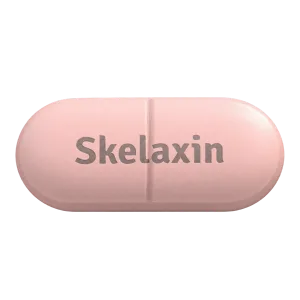
Skelaxin

Skelaxin

Active ingredient: Metaxalone

Package

AED 425.86

AED 672.62 AED 851.72 Save 21%

AED 911.42 AED 1,277.58 Save 29%

AED 1,158.18 AED 1,703.44 Save 32%

AED 1,647.72 AED 2,555.16 Save 36%

AED 2,391.98 AED 3,832.74 Save 38%

Free delivery on orders from AED 796.00, free express delivery from AED 1,194.00

Delivery: from 4 days

Skelaxin is an oral tablet containing metaxalone for short-term relief of acute, painful musculoskeletal conditions. It is prescribed alongside rest and physical therapy for problems such as strains, sprains, muscle spasms, and acute low-back pain.

Product information

Skelaxin belongs to the skeletal muscle relaxant class. Its active ingredient, metaxalone, is used for painful muscle conditions where reducing spasm and discomfort can help a person begin appropriate rest and rehabilitation.

How it affects the body

The precise mechanism of metaxalone has not been fully established. Available prescribing information describes its effect as related to central nervous system depression, meaning reduced nervous-system activity that can produce muscle relaxation, sleepiness, slower reactions, or reduced alertness [1].

Central Nervous System Effects

Metaxalone may reduce the nervous signals associated with painful muscle spasm. The same central effect can cause drowsiness or dizziness. A person may feel capable of driving while reaction time remains impaired.

Skelaxin does not work by directly switching off the muscle’s contractile machinery. This distinction matters because the tablet can reduce symptoms without correcting a fracture, tendon injury, nerve compression, infection, or other cause of pain.

Absence of Direct Muscle Contractile Action

Metaxalone’s central action helps explain why sedation is a practical safety concern. It also explains why the medicine is generally used as an adjunct to rest and physical therapy rather than as a stand-alone cure for a structural injury.

Ingredients

Skelaxin contains metaxalone as its active pharmaceutical ingredient. The established tablet formulation is associated with metaxalone, a centrally acting skeletal muscle relaxant.

Active Ingredient per Tablet

Metaxalone is the component responsible for Skelaxin’s pharmacological action. Tablet strength alone does not determine the correct regimen, since clinicians consider age, liver function, kidney function, concurrent sedatives, and the severity of the musculoskeletal problem.

Inactive Ingredients and Sensitivity Checks

Formulations may contain excipients such as alginic acid, corn starch, and magnesium stearate. People with a known allergy or sensitivity to an excipient should discuss the specific formulation before starting treatment, because inactive ingredients can vary between manufacturers and markets.

Dosage and administration

Skelaxin is taken by mouth as prescribed. The dose is decided individually, taking age, other medicines, and health conditions into account.

  • Take the prescribed amount at the scheduled time.
  • Swallow the tablet as directed.
  • Do not take an extra tablet because relief feels slow.
  • Do not double the next dose after a missed dose.
  • Ask the prescribing clinician or pharmacist how to handle a missed dose if the next scheduled dose is near.
  • Do not increase frequency or extend treatment without clinical direction.
  • Combine treatment with the recommended rest and physical therapy plan.

Oral Administration and Prescribed Schedule

The exact regimen depends on the clinical situation and individual risk factors. Metaxalone is administered orally, and the prescribed schedule should remain consistent rather than being changed according to how severe the pain feels at a particular moment.

A common error is taking a missed dose together with the next one. That can increase drowsiness without improving recovery.

Rest and Physical Therapy Integration

Rest protects an acutely irritated muscle, while physical therapy can restore movement, strength, and function when appropriate. A gradual return to activity is preferable to repeated cycles of overexertion followed by severe pain.

Food Effects on Skelaxin Absorption

A high-fat meal can increase metaxalone exposure and delay the peak plasma concentration. Peak plasma concentration means the highest measured blood level reached after a dose.

High-Fat Meal Exposure Change

A slower-feeling onset after a heavy meal does not prove that the dose has failed. It also does not justify taking another tablet. Follow the prescribed administration instructions consistently rather than changing meal timing to intensify or reduce the effect.

Delayed Peak Concentration

One mistake patients often make is repeating a dose because the first dose feels delayed after a rich meal. That can produce excessive sedation later, when absorption catches up.

Keep meal timing reasonably consistent during a short course. Never use a high-fat meal or fasting to manipulate the strength of the effect.

When not to use it

Skelaxin is not for you if you have known hypersensitivity to metaxalone or any ingredient in the formulation.

Hepatic and Renal Impairment

Metaxalone is processed extensively by the liver. Hepatic impairment may alter exposure and increase the risk of adverse effects. Renal impairment also matters because metabolites and medicine-related substances are eliminated partly through urinary excretion.

Hypersensitivity and Contraindication

Pregnancy, breastfeeding, older age, and use of several sedating medicines also require an individual risk assessment. The FDA prescribing information advises attention to the potential for central nervous system effects and medicine interactions [3].

When this is not for you

Skelaxin requires careful assessment in people with liver disease, kidney disease, a history of medicine allergies, older age, or concurrent use of sedatives. People with diagnosed liver or kidney disease should disclose it before treatment starts. Clinicians decide whether treatment should be avoided, adjusted, or monitored according to the severity of impairment and the complete medication history.

Possible side effects

Recognised adverse effects include drowsiness, dizziness, and nausea. These effects relate to central nervous system depression and may be more pronounced when Skelaxin is combined with alcohol or other sedating substances [2].

Common Adverse Effects

Possible effects include:

  • Sleepiness or reduced alertness
  • Dizziness or light-headedness
  • Nausea
  • Headache
  • Reduced coordination
  • Blurred or less clear concentration

Sit or lie down if dizziness develops, and rise slowly. Avoid driving, climbing, operating machinery, or other hazardous activities until the individual response is clear.

Serious Reaction Warning Signs

Stop using the medicine and seek urgent medical help for breathing difficulty, facial or throat swelling, widespread rash, fainting, severe confusion, extreme sedation, or inability to stay awake. These symptoms can indicate a serious allergic reaction or excessive central nervous system depression.

Feeling awake is not the same as having normal reaction speed. The first dose should not be treated as compatible with driving or equipment operation until its effects are known.

Therapeutic indications

Skelaxin may be prescribed for:

  • Acute low-back pain with muscle spasm
  • Painful muscle strains
  • Sprains and other acute soft-tissue injuries
  • Musculoskeletal discomfort where muscle tension limits movement
  • Short-term support during a rehabilitation plan

The prescriber decides whether metaxalone suits the injury, the person’s medical history, and other medicines.

Comparison

Muscle relaxants differ in their active ingredients, sedative effects, interaction profiles, metabolism, and suitability for people with liver or kidney impairment. No single option is best for every acute musculoskeletal condition.

Treatment category Main selection factors Key limitation
Metaxalone-based treatment Central symptom control, sedation risk, liver function, other sedatives May cause drowsiness, dizziness, and impaired coordination
Other centrally acting muscle relaxants Active ingredient, injury type, age, organ function, interaction profile Sedation and driving restrictions vary
Non-drug rehabilitation with prescribed analgesia when suitable Physical findings, movement limits, pain severity, recovery goals May not provide enough relief when severe spasm limits movement

Clinicians consider age, comorbidities, concurrent sedatives, injury type, expected treatment duration, and the need to remain alert at work. A medicine that feels less sedating can still impair driving or machinery use.

Metaxalone should be selected as part of an individual treatment plan, not by comparing one perceived sedation level with another without considering the whole clinical picture. The EMA and MOHAP provide regulatory and medicine-safety context for evaluating pharmacological treatments within their respective systems.

Common mistakes

Medication-Use Mistakes

Common errors include:

  • Doubling a missed dose
  • Combining Skelaxin with alcohol
  • Taking a sleep medicine without checking for additive sedation
  • Driving soon after the first dose
  • Failing to mention liver or kidney disease
  • Omitting non-prescription sedating antihistamines from the medication list
  • Taking an extra tablet after a high-fat meal delays the perceived onset
  • Continuing strenuous activity because pain temporarily feels lower

Correction is straightforward: use the prescribed schedule, avoid alcohol, disclose every medicine, and stop hazardous activities when alertness changes.

Bring the full medicine list to every prescribing appointment, including occasional sleep tablets and allergy medicines. Interactions are often missed when only daily medicines are mentioned.

What doctors say

In clinical practice, doctors usually describe Skelaxin as a short-term aid for painful spasm, not as treatment for every cause of back or limb pain. The main benefit is improved comfort that may make rest and guided movement more manageable. The main limitation is central nervous system depression, which can interfere with driving, work, and clear thinking.

Clinical Expectations

A clinician may reassess the diagnosis when pain persists despite a short treatment course, when movement becomes more restricted, or when symptoms spread into an arm or leg. Progressive weakness, numbness, fever, severe trauma, or loss of bladder or bowel control needs prompt medical assessment. The review may include a neurological examination and a check of medicines that increase sedation. It can also determine whether imaging or another treatment is needed. Prompt evaluation is especially important when symptoms worsen rather than gradually improve.

Metaxalone does not repair a disc, bone, tendon, ligament, or infected tissue. Symptom improvement should be paired with appropriate rehabilitation rather than used to conceal worsening injury.

Common questions

Can people under 18 use Skelaxin?

Use in people under 18 should be decided by a clinician who has assessed the child or adolescent’s condition. The FDA's 2013 prescribing information for metaxalone does not establish routine safety and effectiveness for paediatric use in the same way as adult use . The cause of pain, body size, other medicines, and the risk of sedation all influence the decision.

What should be discussed with a doctor before starting Skelaxin?

Discuss liver disease, kidney disease, medicine allergies, pregnancy, breastfeeding, older age, and every medicine or sedating product being used. The FDA's 2013 label identifies central nervous system depression and interaction-related sedation as relevant safety issues . Mention opioids, benzodiazepines, sleep medicines, sedating antihistamines, alcohol use, and work that involves driving or machinery.

How long does one Skelaxin dose keep working?

The duration of relief varies with the person, the prescribed schedule, food intake, organ function, and other medicines. A high-fat meal can increase metaxalone exposure and delay its peak blood concentration, so a slower onset does not justify an additional tablet. The FDA's 2013 pharmacokinetic information remains the appropriate basis for individual timing decisions rather than a fixed promise of hours .

Which symptoms mean Skelaxin should be stopped and reviewed urgently?

Emergency symptoms include breathing difficulty, facial or throat swelling, widespread rash, fainting, extreme sedation, severe confusion, or inability to stay awake. Dizziness, nausea, or drowsiness that is worsening or interferes with normal function also warrants prompt clinical advice. The WHO's 2019 medication-safety principles support urgent assessment of severe allergic reactions and excessive central nervous system depression .

Can someone drive, concentrate, or work with machinery while using Skelaxin?

Driving and machinery work should be avoided if drowsiness, dizziness, blurred vision, slowed reactions, or impaired coordination occurs. The EMA’s 2018 medicine-safety approach recognises that subjective alertness may not accurately reflect reaction performance [4]. The first dose, a dose taken after a poor night’s sleep, or a dose combined with another sedative deserves extra caution.

Is alcohol compatible with Skelaxin?

Alcohol should be avoided because it can add to metaxalone-related central nervous system depression. The combination may increase sleepiness, poor coordination, confusion, falls, and breathing problems, especially with opioids, benzodiazepines, or sleep medicines. The WHO's 2019 safety guidance supports avoiding combinations that increase sedative burden when the clinical need for the combination has not been assessed .

Do you offer anonymous delivery?

Your order will be securely packed and shipped within 24 hours. This is exactly what your package will look like (images of an actual item sent). It has the size and look of a regular private letter (24x11x0.7 cm) and its contents cannot be seen.

Comparison

Lioresal

Active ingredient: Baclofen
10mg 25mg
From AED 401.98
pills
4.1 (5)

Robaxin

Active ingredient: Methocarbamol
500mg
From AED 425.86
pills
4.4 (4)

Skelaxin Current

Active ingredient: Metaxalone
400mg
From AED 425.86
pills
4.3 (4)

Tizanidine

Active ingredient: Tizanidine
2mg
From AED 350.24
pills
3.5 (5)

Comparison table: Muscle Spasms

Sources

  1. U.S. Food and Drug Administration (2013). SKELAXIN (metaxalone) Tablets, Prescribing Information.
  2. National Library of Medicine (2024). DailyMed: SKELAXIN- metaxalone tablet.
  3. U.S. Food and Drug Administration (2013). Metaxalone Prescribing Information: Warnings, Precautions and Adverse Reactions.
  4. European Medicines Agency (2018). Guideline on Good Pharmacovigilance Practices: Product- or Population-Specific Considerations.

How Buyers Rate Skelaxin

4.3 Based on 4 reviews
Rashid, 46 Al Nahda Short episode
15 Oct 2026
Rating: 5 out of 5
I used Skelaxin during a short episode of lower-back spasm. Within the treatment period, standing from my desk and walking around the house became much easier, and I was satisfied with the relief.
Yousef, 55 Jebel Ali
24 Oct 2026
Rating: 4.5 out of 5
The muscle tightness after a strain eased enough for me to follow the stretching plan. I took the tablets as scheduled and found the combination of rest and physiotherapy more useful than relying on medicine alone.
Bilal, 44 Ruwais
1 Nov 2026
Rating: 4 out of 5
Skelaxin helped reduce the painful spasm that was limiting my shoulder movement. The improvement was practical rather than dramatic, but I could sleep and move more comfortably during the recovery.
Hassan, 58 Khor Fakkan
10 Nov 2026
Rating: 3.5 out of 5
It reduced some of the back spasm, although the benefit was slower than I expected. I felt sleepy after taking it, so I stopped driving and discussed the timing with my doctor.
Get our free app Shop faster and track your orders 4.0 · 268 reviews Install