Skip to content
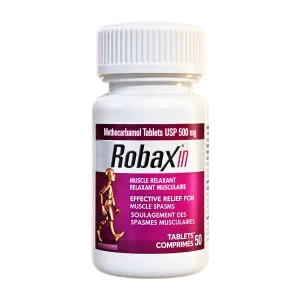
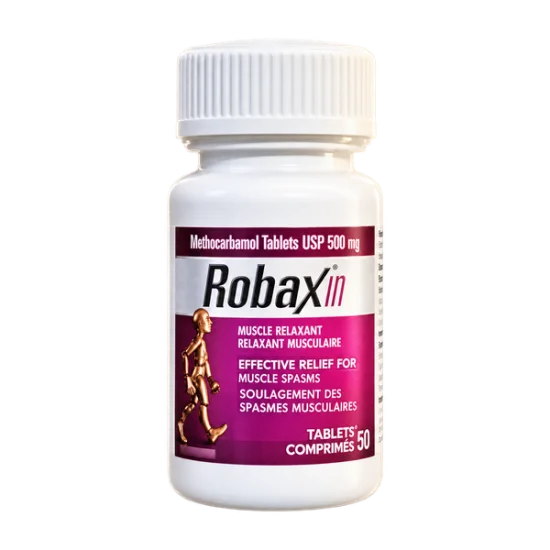
Robaxin

Robaxin

Active ingredient: Methocarbamol

Package

AED 425.86

AED 481.58 AED 851.72 Save 43%

AED 533.32 AED 1,277.58 Save 58%

AED 589.04 AED 2,555.16 Save 77%

AED 636.80 AED 3,832.74 Save 83%

AED 744.26 AED 5,110.32 Save 85%

AED 955.20 AED 7,665.48 Save 88%

AED 1,273.60 AED 11,498.22 Save 89%

AED 1,592.00 AED 15,330.96 Save 90%

Free delivery on orders from AED 796.00, free express delivery from AED 1,194.00

Delivery: from 4 days

Robaxin reduces abnormal muscle-related signals in the central nervous system and contains methocarbamol for painful acute muscle spasms. It is used in adults with short-term musculoskeletal conditions alongside rest, gradual activity, and physical therapy.

Product information

Robaxin is used in adults with short-term musculoskeletal conditions alongside rest, gradual activity, and physical therapy. It belongs to the centrally acting skeletal muscle relaxant category and contains methocarbamol as its active ingredient.

How it affects the body

Methocarbamol works mainly through the central nervous system, reducing excessive nerve activity associated with painful spasm. It does not directly dissolve a muscle knot or rebuild damaged muscle fibres.

Ingredients

Robaxin contains methocarbamol, a centrally acting skeletal muscle relaxant. Methocarbamol is used for acute, painful musculoskeletal conditions in which muscle spasm contributes to discomfort and restricted movement. Clinical guidance describes it as an additional treatment alongside rest, physical therapy, and other supportive measures rather than a treatment that repairs torn tissue or corrects the original injury [1]. Its role is to support short-term symptom control while the underlying condition is assessed and managed.

A skeletal muscle relaxant acts on muscles that are under voluntary control, such as the muscles of the back, neck, shoulders, and limbs. Methocarbamol works mainly through the central nervous system, reducing excessive nerve activity associated with painful spasm. It does not directly dissolve a muscle knot or rebuild damaged muscle fibres.

Patients may notice less tightness and easier movement as the spasm settles. Persistent pain, weakness, numbness, fever, unexplained weight loss, or pain after significant trauma requires medical assessment because these features may point to a condition beyond a simple muscle spasm.

The first dose can cause more drowsiness than later doses. Plan the first administration at a time when driving, climbing, or operating machinery is not required.

Dosage and administration

  • Take Robaxin tablets by mouth with water.
  • Each tablet contains methocarbamol 500 mg; take only the prescribed number of tablets per dose.
  • Follow the prescribed frequency and timing each day. The exact number of doses and tablets per day varies between users and is not established here.
  • Take the tablets with or without food according to the prescribed directions.
  • Use the treatment for the short term, alongside rest, gradual activity, and physical therapy; the exact duration varies between users.
  • Do not take extra tablets or take doses close together after discomfort increases.

When not to use it

A previous serious allergic reaction to methocarbamol or an ingredient in the tablet rules it out unless a qualified clinician establishes a safe alternative.

Relevant factors requiring extra caution or clinical assessment include older age, a history of falls, liver disease, kidney disease, pregnancy, breastfeeding, allergy to methocarbamol, and use of several sedating medicines.

Valium contains diazepam and can add to drowsiness and impaired coordination when combined with methocarbamol. Opioids, sleep medicines, sedating antipsychotics, sedating antihistamines, and alcohol may also increase central nervous system depression.

When this is not for you

NOT for you if you have had a serious allergic reaction to methocarbamol, unless a qualified clinician identifies a safe alternative.

Seek urgent help for facial swelling, widespread hives, throat tightness, breathing difficulty, collapse, or severe confusion.

Possible side effects

Methocarbamol may cause drowsiness, dizziness, headache, blurred vision, nausea, vomiting, confusion, or reduced coordination. A fall in blood pressure can cause weakness or light-headedness, especially when standing. The risk may be greater in older adults and in people taking other central nervous system depressants.

The FDA safety information describes central nervous system depression as a clinically relevant concern with methocarbamol. Alcohol and sedating medicines can intensify impaired concentration and coordination [2].

Possible effect Practical response
Drowsiness, dizziness, or blurred vision Avoid driving and hazardous tasks until alertness returns
Nausea or vomiting Take the tablet with water and report persistent symptoms
Confusion, marked weakness, or faintness Sit or lie down safely and seek medical advice promptly
Facial swelling, widespread hives, or breathing difficulty Seek emergency medical help immediately
Seizure, inability to wake, or severe breathing difficulty Treat as an emergency

An allergic reaction may present with hives, facial or tongue swelling, wheezing, or difficulty breathing. Excessive central nervous system depression may present as unusual difficulty waking, slowed responses, severe confusion, or fainting.

A person who is unusually difficult to wake, confused, or faint should not simply skip the next tablet and wait. Urgent medical assessment is needed.

Seizures require emergency attention. Methocarbamol is not intended to replace assessment of a new seizure, sudden neurological symptom, or severe loss of consciousness.

Therapeutic indications

Methocarbamol is used for acute, painful musculoskeletal conditions in which muscle spasm contributes to discomfort and restricted movement. It is used in adults with short-term musculoskeletal conditions alongside rest, gradual activity, and physical therapy.

Comparison

Different muscle relaxants have different clinical roles and adverse-effect patterns. No single option is suitable for every type of muscle spasm, and a clinician considers the cause of symptoms, sedation, blood pressure, age, fall risk, misuse risk, and other medicines.

Medicine or category Typical clinical role and key caution
Methocarbamol, including Robaxin Acute painful musculoskeletal spasm; drowsiness and dizziness may occur
Cyclobenzaprine, metaxalone, or orphenadrine Acute musculoskeletal spasm; sedation and tolerability differ between agents
Tizanidine, baclofen, carisoprodol, or dantrolene Often selected for specific neurological or severe spasticity contexts; hypotension, dependence, or liver-related concerns may influence choice

Skelaxin is associated with metaxalone. Flexeril and Amrix are associated with cyclobenzaprine. Zanaflex contains tizanidine, Ozobax contains baclofen, and Fexmid is associated with cyclobenzaprine. These names describe medicines with different active ingredients and prescribing considerations.

Tizanidine may cause sedation and low blood pressure. Baclofen is commonly used for spasticity related to neurological conditions rather than a straightforward short-term muscle strain. Carisoprodol raises concerns about misuse, dependence, and impairment. Dantrolene has a distinct direct effect on skeletal muscle and carries liver-related monitoring considerations.

Cyclobenzaprine, metaxalone, and orphenadrine have different tolerability profiles. A prescriber may avoid one option because of anticholinergic effects, excessive sleepiness, low blood pressure, interactions, or a patient’s fall history. A 2020 review indexed in PubMed describes meaningful differences among skeletal muscle relaxants and supports choosing according to the clinical setting rather than applying one universal preference [3].

Common mistakes

Some mistakes are predictable and preventable:

  1. Taking two tablets to imitate another strength. A 500 mg tablet and a 750 mg tablet are not interchangeable instructions. Extra tablets can increase sedation and dizziness.
  2. Driving after the first dose. Methocarbamol can impair reaction time before the person recognises the effect.
  3. Combining it with alcohol. Alcohol can intensify drowsiness, poor coordination, and impaired judgement.
  4. Adding a sedative without checking the full list. Sleep medicines, Valium, opioids, and sedating allergy medicines may compound impairment.
  5. Stopping physical therapy too early. Robaxin may ease spasm while mobility and strength still need rehabilitation.
  6. Continuing strenuous activity because pain has improved. Lifting, twisting, or sports can aggravate the original problem.
  7. Doubling a missed dose. Take the next dose according to the prescribed schedule unless a clinician gives different instructions.
  8. Ignoring neurological symptoms. New weakness, spreading numbness, loss of bladder or bowel control, or severe unremitting pain needs prompt assessment.
For the first few doses, stand up slowly and use a handrail on stairs. This simple habit helps reveal dizziness before a fall occurs.

What doctors say

In clinical practice, prescribers usually treat Robaxin as a short-term aid for painful spasm, not as a stand-alone solution for every back or neck problem. The key decision is whether the likely benefit in movement and comfort outweighs sedation, dizziness, fall risk, and interaction with other central nervous system depressants.

A clinician will usually consider:

  • Whether the spasm followed strain, overuse, or another identifiable cause.
  • Whether there is weakness, numbness, fever, trauma, or unexplained pain.
  • The person’s age and history of falls.
  • Alcohol use and all medicines that can reduce alertness.
  • Liver and kidney function.
  • Whether physical therapy or gradual movement is part of the plan.
  • Whether the treatment should remain short term.

One detail patients often miss is that pain relief can create a false sense that the injured area is ready for heavy activity. Reduced spasm does not necessarily mean that the underlying strain has recovered.

Another practical issue is timing. If a dose causes marked sleepiness during the day, the prescribed schedule may need clinical review rather than self-adjustment. The 2019 WHO guidance on medication safety supports careful review of medicine combinations and patient-specific risk factors when treatment affects alertness [4].

Common questions

What should I do after missing a Robaxin dose?

Take the missed dose when remembered only if the next scheduled dose is not near; otherwise, skip it and return to the normal schedule. Do not take two doses together. FDA prescribing information from 2019 describes methocarbamol dosing as dependent on the clinical regimen, so the safe response to a missed dose is not to create an extra dose. Persistent uncertainty after a missed dose should be resolved through the prescribing service.

What should I do if the expected relief does not come?

Do not take extra tablets to force a faster result. Methocarbamol may reduce spasm-related discomfort, but ongoing or worsening pain can indicate a different cause or a need for reassessment. Clinical guidance from the American College of Physicians in 2017 supports evaluation when acute low-back symptoms do not follow the expected course, especially when neurological symptoms appear.

Can Robaxin tablets be split, crushed, or chewed?

Do not split, crush, or chew a tablet unless the prescribed instructions specifically allow it. Altering a tablet can make the dose harder to measure and may cause swallowing problems or an unpleasant taste. The FDA product information from 2019 supports taking methocarbamol tablets as an oral solid dosage form rather than changing the form independently.

How long does one Robaxin dose keep working?

The duration of relief varies with the person, prescribed schedule, muscle condition, and other medicines. Methocarbamol is used in repeated oral dosing rather than as a guaranteed single-dose cure for a muscle spasm. A 2020 PubMed-indexed review describes variation in response and sedation among skeletal muscle relaxants, so do not repeat a dose early because discomfort returns.

Can Robaxin be used during pregnancy or breastfeeding?

Pregnancy and breastfeeding require an individual clinical decision based on the severity of the muscle problem and available alternatives. Do not start, stop, or change treatment during pregnancy without a prescriber’s direction. The EMA’s 2021 general principles for medicine use in pregnancy support weighing maternal benefit against fetal and infant exposure for centrally acting medicines.

Can Robaxin be taken with food or on an empty stomach?

Methocarbamol tablets may be taken with water, and food may be useful if the medicine causes stomach discomfort. Food does not remove the risk of drowsiness or dizziness. FDA information from 2019 does not make eating a substitute for interaction precautions, so alcohol and other sedating medicines remain relevant regardless of meal timing.

Which condition rules out Robaxin?

A previous serious allergic reaction to methocarbamol or an ingredient in the tablet rules it out unless a qualified clinician establishes a safe alternative. Emergency symptoms include facial swelling, throat tightness, breathing difficulty, widespread hives, collapse, or severe confusion. WHO medication-safety principles published in 2019 support prompt escalation when a suspected medicine reaction affects breathing, consciousness, or circulation.

Do you offer anonymous delivery?

Your order will be securely packed and shipped within 24 hours. This is exactly what your package will look like (images of an actual item sent). It has the size and look of a regular private letter (24x11x0.7 cm) and its contents cannot be seen.

Comparison

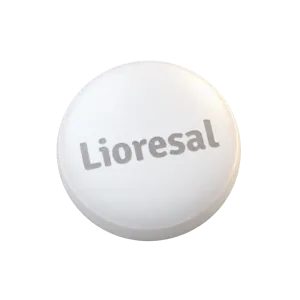
Lioresal

Active ingredient: Baclofen
10mg 25mg
From AED 401.98
pills
4.1 (5)

Robaxin Current

Active ingredient: Methocarbamol
500mg
From AED 425.86
pills
4.4 (4)

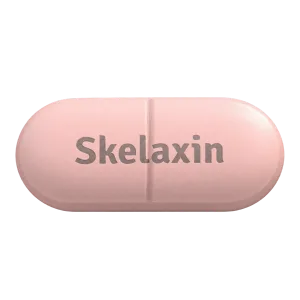
Skelaxin

Active ingredient: Metaxalone
400mg
From AED 425.86
pills
4.3 (4)

Tizanidine

Active ingredient: Tizanidine
2mg
From AED 350.24
pills
3.5 (5)

Comparison table: Muscle Spasms

Sources

  1. U.S. Food and Drug Administration (2019). Robaxin (methocarbamol) tablets — prescribing information.
  2. U.S. Food and Drug Administration (2019). Robaxin (methocarbamol) tablets — warnings, precautions, and adverse reactions sections of the prescribing information.
  3. PubMed (2020). PubMed record — methocarbamol and skeletal muscle relaxants.
  4. World Health Organization (2019). Medication Safety in Polypharmacy.

How Buyers Rate Robaxin

4.4 Based on 4 reviews
Sultan, 64 Mussafah Short-term use
8 Nov 2026
Rating: 5 out of 5
I used Robaxin during a painful back spasm and noticed that turning in bed became easier after a few days. The tight feeling settled enough for me to walk more comfortably, and I was satisfied with the result.
Reem, 33 Bur Dubai Short-term use
12 Nov 2026
Rating: 3.5 out of 5
Robaxin reduced the neck spasm, but it made me sleepy during the first part of the day. I avoided driving after taking it and found the benefit useful, although the drowsiness was inconvenient.
Anil, 32 Dubai Marina Short-term use
15 Oct 2026
Rating: 5 out of 5
The muscle tightness after a gym strain eased during the treatment. I could return to gentle movement and did not feel the need to keep taking pain tablets throughout the day.
Hamza, 43 Al Nahda Short-term use
25 Oct 2026
Rating: 4 out of 5
The tablets helped with a lower-back spasm and made normal walking easier. I still had to reduce lifting for a while, because the improvement in pain did not mean the strain had completely healed.
Get our free app Shop faster and track your orders 4.0 · 268 reviews Install