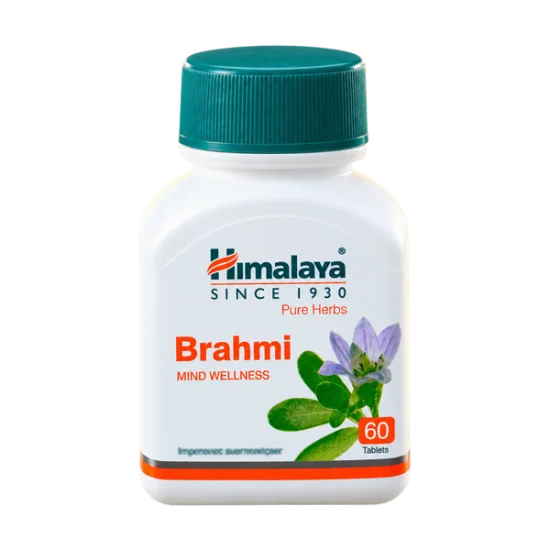
Brahmi
Active ingredient: Bacopa monnieri
Delivery: from 4 days
- Worldwide Delivery4-7 business days
- Quality GuaranteedOnly original products
- Bonus pillsSave up to 80%
- 24/7 SupportOur team of pharmacists is available 24/7 to help you
Brahmi supports memory, attention and mental calm through Bacopa monnieri, an Ayurvedic botanical studied for cognitive function. Its bacosides may influence antioxidant and neuronal-signalling pathways, while results vary with extract quality, amount and individual response. [1]
Product information
Brahmi is the name commonly associated with Bacopa monnieri, an aquatic herb used in Traditional Ayurvedic medicine. Scientific literature also uses the spellings Bacopa monniera and Bacopa monniera Linn. The product is supplied as an oral Brahmi supplement in bottles and is intended for adults seeking support for memory, attention, learning or mental calm.
Brahmi belongs to the Ayurvedic category known as Medhya Rasayana, traditionally linked with intellect and mental wellbeing. Modern research has examined Bacopa monnieri for memory, attention, stress response and selected aspects of cognitive performance. These findings support cautious expectations rather than a guaranteed result.
Scientific Names and Plant Material
Bacopa monnieri and Bacopa monniera describe the same botanical species in commonly used scientific references. The plant contains several groups of compounds, with bacosides serving as important marker constituents in many Bacopa extracts.
The strength and composition of a Brahmi preparation can vary according to the plant material, extraction method, concentration and standardisation process. Two products bearing the name Brahmi may therefore provide different amounts of bacosides and may not produce identical results.
How it affects the body
Brahmi contains bacosides, a group of Bacopa triterpenoid saponins investigated for effects on neuronal communication and cellular protection. It also contains other saponins and alkaloids, including Brahmine.
A saponin is a plant compound with a distinctive chemical structure that can influence biological membranes and signalling pathways. An alkaloid is a nitrogen-containing plant compound. The presence of these constituents does not prove that the finished supplement will treat a disease.
Bacosides and Bacopa Triterpenoid Saponins
Bacosides are frequently used as marker compounds when Bacopa extracts are assessed for standardisation. Standardisation means adjusting an extract to a stated level of selected constituents, helping improve consistency between batches.
A higher labelled bacoside percentage does not automatically mean greater benefit. Extract composition, tolerability, dose, absorption and the individual’s health profile also influence the practical result.
Alkaloids and Brahmine
Brahmine is an alkaloid identified in Bacopa research. Laboratory work has investigated Bacopa alkaloids and saponins in relation to antioxidant activity, neuronal signalling and cellular stress.
These mechanisms remain proposed explanations. They should not be presented as proof that Brahmi prevents dementia, treats Parkinson’s disease or reverses neurological damage.

Ingredients
The key botanical ingredient is Bacopa monnieri. Its recognised phytochemical groups include bacosides, Bacopa triterpenoid saponins and smaller amounts of alkaloids such as Brahmine.
Dosage and administration
Brahmi is an oral supplement supplied in bottles. The amount per intake is set individually rather than being one fixed number for every person. Use the serving direction provided for this product and avoid increasing it because the cognitive effect is not immediate.
- Take the oral preparation consistently at the same general time each day.
- Taking it with food may reduce nausea or abdominal discomfort unless the product directions specify another method.
- Do not double the next intake after a missed serving.
- Stop increasing the amount if loose stools, cramping or unusual fatigue develops.
- Allow time for assessment before deciding whether the intended benefit is present.
Brahmi powder, Brahmi capsules and Bacopa monnieri extract are oral formats, but their concentrations can differ. Brahmi Tea is a diluted preparation. Brahmi Oil is generally intended for topical use and should not be assumed to provide the same constituents as an oral extract. Brahmi Vati and Brahmi Ghrita are traditional compound preparations whose ingredients and routes may differ from a single-ingredient oral supplement.
When not to use it
This supplement may be unsuitable or require clinical review in people with:
- Pregnancy or breastfeeding
- A thyroid disorder or thyroid treatment
- Slow heart rate or a rhythm disorder
- Peptic ulcer disease or recurrent stomach irritation
- Asthma
- Urinary obstruction or difficulty emptying the bladder
- A planned operation or procedure
- A known allergy to Bacopa or related botanical ingredients
Extra review is sensible with:
- Medicines that affect thyroid hormones
- Medicines that slow the heart rate
- Cholinergic medicines that influence acetylcholine activity
- Drugs with a narrow therapeutic margin
- Other products used for sleep, anxiety or mental calm
When this is not for you
Brahmi is not for you if you have experienced a serious reaction to Bacopa monnieri, have unexplained fainting or severe bradycardia, or are preparing for surgery without first discussing the supplement with the treating team.
If drowsiness occurs, avoid driving and operating machinery until the effect is clear. Disclose Brahmi before surgery and before starting a new prescription, especially when anaesthesia, sedatives or medicines affecting heart rhythm are involved.
Possible side effects
Brahmi is often tolerated without serious problems, but digestive effects are possible. The most relevant practical limitation is that concentrated extracts may cause more gastrointestinal symptoms than a mild tea preparation.
Common Adverse Effects
Possible effects include:
- Nausea or stomach discomfort
- Abdominal cramping
- Loose stools or increased bowel movements
- Fatigue or drowsiness
- Headache
- Skin or allergic reactions in sensitive individuals
Stop using Brahmi and seek urgent medical attention for facial or throat swelling, breathing difficulty, fainting, severe weakness, confusion, chest symptoms or a widespread blistering rash. Persistent diarrhoea, severe abdominal pain or marked sleepiness also needs prompt medical assessment.
Therapeutic indications
Brahmi has been studied for memory, learning, attention, visual information processing and broader brain function. Some human trials report gradual improvement in selected memory tasks after consistent use, while other studies show smaller or less certain effects. Outcomes depend on the extract, study duration, participant age and the cognitive test used.
Traditional Ayurvedic use describes Brahmi as a Medhya Rasayana. Modern clinical research uses different standards and does not treat that traditional classification as proof of a medical outcome.
| Area studied | What research suggests | Main limitation |
|---|---|---|
| Memory and learning | May support recall and retention over time | Studies use different extracts and cognitive tests |
| Attention and processing | May influence attention and visual information processing | Benefits are not consistent for every user |
| Stress and ADHD-related symptoms | May support mental calm in some settings | It does not replace ADHD assessment or established treatment |
Memory, Learning and Attention
Bacopa monnieri may influence memory consolidation, the process through which newly learned information becomes easier to retrieve later. Some clinical studies have also examined attention, reaction time and visual information processing.
Stress, Mental Calm and ADHD-Related Symptoms
Research has explored Bacopa monnieri for stress, anxiety-related symptoms and mental calm. Evidence for ADHD-related symptoms remains limited, and attention deficit hyperactivity disorder involves patterns such as hyperactivity, impulsivity and persistent difficulty sustaining attention across settings.
Comparison
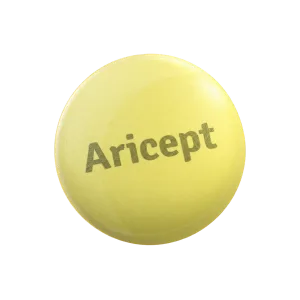
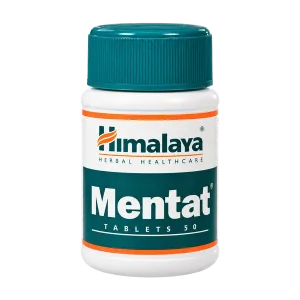
Brahmi is an oral Bacopa monnieri botanical supplement studied for memory, attention and mental calm, differing from prescription cognitive treatments through its traditional Ayurvedic use and variable extract-dependent evidence.
Common mistakes
Several habits make Brahmi difficult to assess:
- Increasing the serving after only a few days because the expected cognitive change has not appeared
- Combining several Bacopa-containing products
- Treating Brahmi Oil as an oral Bacopa extract
- Ignoring diarrhoea, cramping or pronounced drowsiness
- Failing to mention the supplement before surgery
- Using Brahmi for suspected ADHD without a formal assessment
- Assuming a traditional description proves treatment for a neurological disease
- Starting the supplement at the same time as several other new products
One practical mistake is judging memory while sleep-deprived. Poor sleep, dehydration and high stress can overwhelm a small cognitive benefit and make the result impossible to interpret.
What doctors say
A clinician would usually separate three issues: the reason for taking Brahmi, the person’s current medicines and the response over time. A supplement may be considered for general cognitive support in an otherwise suitable adult, yet it should not delay investigation of new memory loss, marked personality change, severe anxiety or daytime sleepiness.
WHO publications on traditional medicines support careful attention to preparation, quality and safe use, while MOHAP provides the relevant UAE health-regulatory context for medicinal and health products. The European Medicines Agency approach to herbal medicines also emphasises that traditional use and clinical evidence are not identical forms of support. [2]
The most useful clinical question is practical: what change would count as meaningful, and what symptom would make continued use unreasonable?
Common questions
Which symptoms mean stopping Brahmi and seeking urgent medical help?
Severe allergic symptoms, breathing difficulty, facial swelling, fainting, chest symptoms, confusion or a widespread blistering rash require urgent medical attention. Severe abdominal pain, persistent vomiting or significant diarrhoea also warrants prompt assessment. WHO herbal-medicine safety principles published in 1999 support stopping a suspected offending preparation when serious symptoms develop. [3]
What should I do if the expected result does not appear?
Do not keep increasing the intake simply because memory or attention has not changed quickly. Review sleep, stress, other medicines and the specific outcome you hoped to improve, then discuss persistent concerns with a qualified clinician. A 2012 clinical trial indexed in PubMed found that Bacopa outcomes were assessed over sustained use rather than after a single intake, so an immediate response should not be expected. [4]
How does Brahmi differ from the closest alternative by mechanism?
Brahmi provides Bacopa monnieri constituents, including bacosides, rather than a single conventional stimulant or sedative drug. Its proposed actions involve antioxidant, cellular-signalling and neuronal pathways, while prescription treatments for ADHD or anxiety act through defined pharmacological targets and require clinical selection. EMA herbal-medicine principles distinguish traditional botanical use from the evidence standard applied to authorised medicines, as reflected in its 2018 guidance on herbal medicinal products. [5]
Which concrete condition rules Brahmi out?
A serious previous reaction to Bacopa monnieri rules it out. Unexplained fainting, a markedly slow heart rate, pregnancy, breastfeeding, thyroid treatment, urinary obstruction, ulcer disease or planned surgery also require a clinical review before use. MOHAP safety guidance published in 2024 supports checking for condition-specific risks rather than assuming that a botanical supplement suits every adult.
Do you offer anonymous delivery?
Your order will be securely packed and shipped within 24 hours. This is exactly what your package will look like (images of an actual item sent). It has the size and look of a regular private letter (24x11x0.7 cm) and its contents cannot be seen.
Comparison
Sources
- World Health Organization (2003). WHO guidelines on good agricultural and collection practices (GACP) for medicinal plants.
- Ministry of Health and Prevention (MOHAP) (2024). Health and medicinal product safety information.
- World Health Organization (1999). WHO Monographs on Selected Medicinal Plants, Volume 1.
- PubMed (2012). Bacopa monnieri (Brahmi) extract improves memory performance in older adults.
- European Medicines Agency (2018). Guideline on quality of herbal medicinal products/traditional herbal medicinal products.