Skip to content
Renalka

Renalka

Active ingredient: Renalka

Dosage
Package
Package

AED 202.98

AED 286.56 AED 304.47 Save 6%

AED 254.72

AED 354.22 AED 382.08 Save 7%

Free delivery on orders from AED 796.00, free express delivery from AED 1,194.00

Delivery: from 4 days

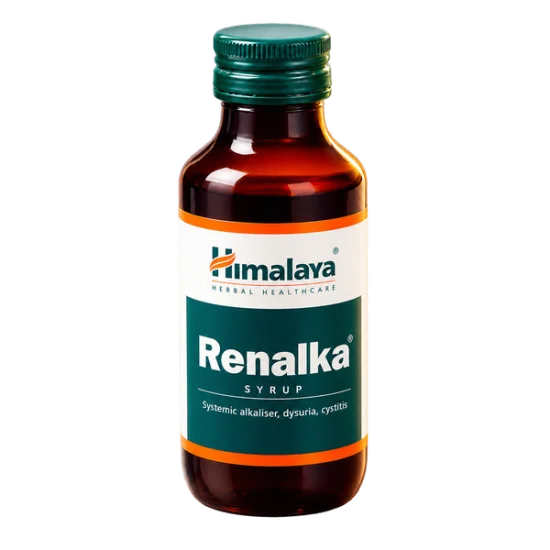
Renalka Syrup belongs to the herbal urinary-care category and may be used for general urinary wellness. It is intended as supportive care alongside appropriate assessment and treatment when a person has urinary concerns. A herbal syrup does not establish the cause of symptoms or remove an obstruction.

Product information

Renalka Syrup belongs to the herbal urinary-care category. In practical terms, “supportive care” means an adjunct used alongside appropriate assessment and treatment when a person has urinary concerns; it does not establish the cause of symptoms or remove an obstruction.

Urinary symptoms can arise from several conditions:

  • A bacterial urinary tract infection
  • A kidney or ureteric stone
  • Dehydration
  • Prostate-related urinary obstruction
  • Medication effects
  • Reduced kidney function
  • Bladder irritation or other urological conditions

How it affects the body

The active botanical ingredients in Renalka are intended to provide supportive urinary-care effects through plant-derived biological activity. Their effects may involve influences on urinary tract comfort, fluid balance, or related physiological processes, but the specific mechanism depends on the named herbs and their extract concentrations. Renalka does not directly eradicate bacterial infection, remove every stone, or restore impaired kidney filtration.

Ingredients

A botanical extract is a concentrated preparation made from a plant or plant part. An excipient is a non-active ingredient used to give a syrup its texture, taste, stability, or preservation.

For Renalka, the clinically relevant composition questions include:

  • Which Ayurvedic herbs are present
  • Whether each herb is a powder, fluid extract, or concentrated extract
  • The amount of each botanical per serving
  • Whether the syrup contains sugar or another sweetener
  • Whether the formulation contains alcohol or other preservation agents
  • Whether the formulation is suitable for a person with diabetes, fluid restrictions, or ingredient allergies

Traditional Rationale and Evidence Limits

Ayurvedic herbs may have a long history of traditional use, but traditional use does not automatically equal proof from modern clinical trials. Renalka can be considered a supportive urinary-care product, while diagnosis and treatment of infection, obstruction, stones, or kidney disease require clinical evaluation.

Liquid products require accurate measurement because the amount of herbal extract delivered depends on the concentration. A household teaspoon can hold substantially more or less than a medicinal measuring device.

Dosage and administration

Renalka is an oral syrup. The amount and frequency depend on the purpose of use, age, formulation, and advice from a doctor or pharmacist.

Label-Based Dose and Measuring Technique

Use the product-directed or professionally advised dose. The practical method is:

  1. Shake the bottle when the formulation instructions require it.
  2. Take it by mouth at the recommended frequency.
  3. Do not increase the amount because urinary symptoms remain uncomfortable.
  4. Do not combine Renalka with another herbal urinary product without reviewing the ingredients.

An oral syringe is more precise than a kitchen spoon. This matters most when a liquid contains concentrated extracts, because a small measuring error can change the amount taken.

Duration of Use and Missed Doses

The appropriate duration depends on the reason for use and the clinical response. Persistent or recurring symptoms need review rather than an automatic extension of the course.

If a dose is missed, take the next scheduled dose when appropriate. Do not take an extra amount to compensate for the missed dose. If the next dose is close, omit the missed dose and continue with the usual schedule.

When not to use it

Use requires individual medical advice in the following situations:

  • Pregnancy or breastfeeding
  • Childhood use
  • Chronic kidney disease
  • Heart failure or fluid restriction
  • Recurrent kidney stones
  • Recurrent urinary infections
  • Multiple prescription medicines
  • Known allergy to any botanical or excipient
  • Diabetes when the syrup contains a sweetening ingredient
  • Previous serious reaction to an herbal product

When this is not for you

Renalka is not suitable for self-directed use when a person has severe urinary symptoms, known urinary obstruction, markedly reduced urine output, or an acute illness causing dehydration. It is not for you if you have any of these conditions or need urgent assessment.

Pregnant or breastfeeding people should obtain individual advice before using Renalka. Children should receive age-appropriate guidance before taking a medicinal syrup. Older adults who take several medicines also need a medication review because reduced kidney function and polypharmacy can change the risk of interactions.

Stop Renalka and seek urgent care for breathing difficulty, facial swelling, severe rash, confusion, severe flank pain with vomiting, fever with urinary symptoms, or inability to pass urine.

Possible side effects

Herbal products can cause unwanted effects and can interact with medicines. Renalka may be tolerated without difficulty by some users, yet gastrointestinal upset, an allergic reaction, or changes in urinary symptoms are possible.

Expected Tolerability and Reportable Reactions

Potential reactions include:

  • Nausea, stomach discomfort, loose stools, or abdominal cramping
  • Headache or an unpleasant taste
  • Skin itching, hives, or a rash
  • Worsening urinary discomfort
  • New swelling or unusual changes in urine output

Stop using Renalka and seek urgent help for facial or throat swelling, breathing difficulty, widespread blistering rash, severe weakness, confusion, or markedly reduced urine output.

Severe flank pain, persistent vomiting, fever, chills, or visible blood in urine also require prompt assessment. Temporary symptom relief does not rule out a condition that needs treatment.

Medicine Interactions and Condition-Based Precautions

The word “herbal” does not mean interaction-free. A pharmacist or doctor should review Renalka before use when a person takes:

  • Diuretics or medicines that alter fluid balance
  • Blood-pressure treatment
  • Diabetes medicines
  • Anticoagulants or antiplatelet medicines
  • Medicines processed by the liver or kidneys
  • Other herbal preparations with urinary or diuretic effects

Therapeutic indications

Renalka is associated with supportive kidney and urinary tract care. The product may be considered for general urinary wellness, but symptom relief alone cannot identify whether a person has an infection, stone, obstruction, or impaired kidney function.

Urinary Discomfort and Wellness Support

Burning urination, urgency, and frequency may occur with a urinary tract infection. They can also occur with bladder irritation or other conditions. A syrup should not delay urine testing when symptoms are significant, persistent, recurrent, or accompanied by fever.

Confirmed bacterial infection may require an antimicrobial selected after clinical assessment. Renalka does not replace that treatment.

Kidney Stones and Flank Pain

A kidney stone can cause severe flank pain, nausea, vomiting, urinary blood, or pain that travels toward the groin. The size and location of a stone influence whether it can pass without intervention.

Renalka should not be assumed to dissolve or pass every stone. Imaging, urine testing, and kidney-function assessment may be needed, especially when pain is severe or urine flow is reduced.

Increasing fluid intake is not suitable for every person. People with heart failure, advanced kidney disease, or a prescribed fluid restriction should not force extra fluids to manage urinary symptoms.

Comparison

Renalka is best understood as a supportive Ayurvedic product rather than a replacement for antibiotics, stone-specific treatment, obstruction relief, or specialist kidney care.

Approach Main role
Renalka supportive use May be used for general urinary wellness alongside appropriate assessment
Clinical assessment Identifies infection, obstruction, stones, or impaired kidney function
Targeted treatment Addresses the confirmed cause, such as bacterial infection or a clinically significant stone

A clinician treats the cause of urinary symptoms, not only the discomfort. For example, antibiotics may be needed for a confirmed bacterial infection, while a blocked ureter may require urgent urological management.

Common mistakes

Real-world problems often arise from measurement errors, delayed assessment, or assumptions about herbal products.

Dose Measurement and Storage Errors

Common mistakes include:

  • Estimating the dose with a kitchen teaspoon
  • Taking extra syrup because symptoms continue
  • Forgetting whether a dose has already been taken
  • Combining several urinary-care products
  • Storing the bottle in unsuitable conditions
  • Continuing the product after a new rash or gastrointestinal reaction
  • Assuming every bottle has the same concentration

Delayed Diagnosis of Urinary Disease

Another mistake is treating fever, blood in urine, or severe pain as ordinary urinary discomfort. A person may feel temporary relief while an infection or obstruction continues.

Do not rely on Renalka alone when symptoms include:

  • Fever or chills
  • Pain in the back, side, or lower abdomen
  • Repeated vomiting
  • Visible blood in urine
  • Inability to pass urine
  • Markedly reduced urine output
  • Confusion or unusual drowsiness
Tell the clinician about every herbal product, vitamin, and non-prescription medicine being used. The combination can matter even when each product is taken at a different time of day.

What doctors say

In clinical practice, urinary symptoms are assessed by pattern, duration, associated signs, medical history, and test results. A doctor would usually distinguish uncomplicated discomfort from signs of infection, obstruction, stone disease, or kidney impairment before relying on supportive care. The review may include symptom duration and changes in urinary function. Test results help determine whether supportive care is reasonable. Follow-up depends on the suspected cause and the person’s response.

A practical medical view is that Renalka may fit alongside monitoring when symptoms are mild and no red flags are present. It should not be used to postpone evaluation when symptoms persist or recur.

The product also requires realistic expectations. Traditional-use positioning does not prove that a syrup will remove a stone or eradicate bacteria. Clinicians generally judge progress by symptom resolution, urine findings, kidney function, and the absence of recurrence.

Common questions

Can Renalka be taken with blood-pressure or diabetes medicines?

Renalka should be reviewed before combining it with blood-pressure treatment, diabetes medicines, diuretics, or other herbal products. Botanical ingredients can affect fluid balance, blood glucose, or blood pressure in susceptible people. Guidance from WHO in 2019 supports reviewing traditional products within the person’s complete treatment plan rather than assuming that herbal products have no interactions [1]. Give the pharmacist or doctor a full list of medicines and supplements.

How long does one dose of Renalka keep working?

The duration of action of one serving cannot be treated as a fixed interval for every person because it depends on the formulation, serving amount, symptoms, and individual response. Renalka is a supportive syrup, not a long-acting treatment with a predictable single-dose effect. Ayurvedic product use should follow the product-directed schedule, while persistent symptoms require assessment rather than repeated unscheduled servings. The EMA’s 2018 principles for herbal medicinal products emphasise product-specific evidence and information [2].

What should be done after a missed dose?

Take the next scheduled serving when appropriate and do not double the amount to compensate. If the next serving is due soon, omit the missed serving and return to the usual schedule. The safest approach is to avoid changing frequency because symptoms have not improved. WHO guidance from 2019 supports clear dose timing and avoidance of compensatory double dosing.

Which diet, exercise, or habits can help urinary comfort?

Adequate fluid intake may help some people, but it is unsuitable for people with prescribed fluid restrictions, advanced kidney disease, or certain heart conditions. Avoiding dehydration, not holding urine for long periods, and maintaining regular physical activity can support general health. These habits do not treat a bacterial infection or remove an obstructing stone. NICE guidance from 2019 stresses assessment of urinary symptoms when infection is suspected [3].

How soon can an effect from Renalka become noticeable?

There is no reliable universal time at which every person should notice a benefit. Mild urinary discomfort may change over days, while persistent or recurrent symptoms need testing rather than indefinite use. A lack of improvement, worsening discomfort, fever, blood in urine, or flank pain should prompt medical assessment. WHO guidance from 2019 indicates that traditional-use claims should not be converted into a guaranteed onset time.

Which symptoms mean stopping Renalka and seeking urgent care?

Stop Renalka and seek urgent care for facial or throat swelling, breathing difficulty, a severe rash, confusion, inability to pass urine, or markedly reduced urine output. Fever with urinary symptoms, severe flank pain, repeated vomiting, and visible blood in urine also require prompt evaluation. WHO guidance from 2019 supports prompt evaluation because these features can indicate an allergic reaction, infection, obstruction, or kidney complication. Do not take another serving while waiting for urgent assessment.

Do you offer anonymous delivery?

Your order will be securely packed and shipped within 24 hours. This is exactly what your package will look like (images of an actual item sent). It has the size and look of a regular private letter (24x11x0.7 cm) and its contents cannot be seen.

Sources

  1. World Health Organization (2019). WHO Global Report on Traditional and Complementary Medicine 2019.
  2. European Medicines Agency (2018). Guideline on the Assessment of Herbal Medicinal Products.
  3. National Institute for Health and Care Excellence (2019). Urinary tract infection in under 16s: diagnosis and management.

How Buyers Rate Renalka

4.3 Based on 4 reviews
Tariq, 62 Ajman Several weeks
15 Oct 2026
Rating: 5 out of 5
I used the recommended dose of Renalka for several weeks. The burning sensation eased gradually, and I found the syrup simple to measure with the supplied cup. I was satisfied with the improvement.
Arjun, 28 Al Nahda Several days
27 Oct 2026
Rating: 2 out of 5
I used the recommended dose of Renalka for several days, but it did not make much difference to the urgency I was having. I developed stomach discomfort and stopped. A later medical review showed that I needed a different approach.
Faisal A., 65 Dubai Marina Several weeks
5 Nov 2026
Rating: 5 out of 5
The urinary discomfort became less noticeable after I used the recommended dose of Renalka consistently for several weeks. I kept the bottle in a cool cupboard and measured each serving instead of using a kitchen spoon. That routine worked well for me.
Karim, 30 Jebel Ali Several days
12 Nov 2026
Rating: 5 out of 5
I chose Renalka as supportive care when I had mild urinary irritation and took the recommended dose for several days. The symptoms settled over time, and the syrup was easy to take. I appreciated that it fitted into my daily routine.
Get our free app Shop faster and track your orders 4.0 · 268 reviews Install