
Skip to content
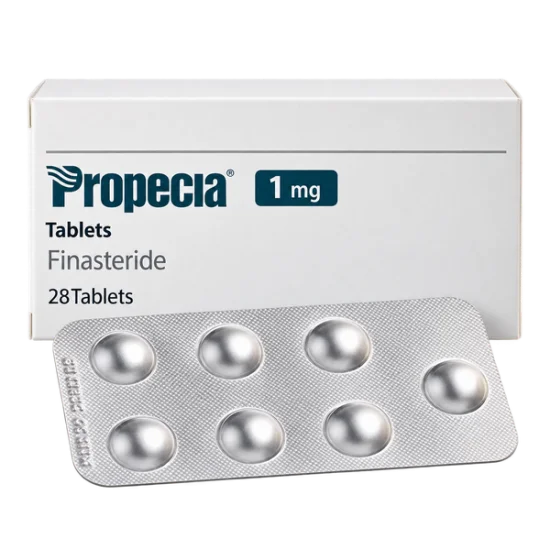
Propecia

Propecia

Active ingredient: Finasteride

Dosage
Package
Package

AED 163.18

AED 183.08 AED 244.77 Save 25%

AED 222.88 AED 489.54 Save 54%

AED 282.58 AED 734.31 Save 62%

AED 322.38 AED 979.08 Save 67%

AED 437.80 AED 1,468.62 Save 70%

AED 597.00 AED 2,202.93 Save 73%

AED 716.40 AED 2,937.24 Save 76%

AED 163.18

AED 183.08 AED 326.36 Save 44%

AED 199.00 AED 489.54 Save 59%

AED 262.68 AED 979.08 Save 73%

AED 358.20 AED 1,468.62 Save 76%

AED 437.80 AED 1,958.16 Save 78%

AED 597.00 AED 2,937.24 Save 80%

AED 716.40 AED 4,405.86 Save 84%

AED 855.70 AED 5,874.48 Save 85%

Free delivery on orders from AED 796.00, free express delivery from AED 1,194.00

Delivery: from 4 days

Propecia is an oral prescription tablet for adult men with male pattern hair loss. Finasteride lowers scalp DHT, and the appropriate strength and regimen should be confirmed with a healthcare professional before starting.

Product information

Propecia is an oral prescription tablet containing finasteride. It is intended for adult men with male pattern hair loss, also called androgenetic alopecia or male pattern baldness. Finasteride belongs to the 5-alpha-reductase inhibitor class. The appropriate strength and regimen should be confirmed with a healthcare professional before starting. The FDA describes Propecia as a treatment for men with mild-to-moderate androgenetic alopecia, with benefits assessed through hair retention and scalp hair growth rather than a guaranteed full restoration of lost hair [1].

Active Ingredient and Tablet Strength

Finasteride reduces the conversion of testosterone into dihydrotestosterone, commonly called DHT.

How it affects the body

Finasteride inhibits type II 5-alpha reductase, an enzyme that converts testosterone into DHT. DHT is an androgen that can bind to receptors in genetically sensitive scalp follicles.

Follicle miniaturisation means progressive shrinking of a hair follicle. The growing hair becomes finer and shorter, while the visible scalp area becomes more noticeable over time. By lowering DHT exposure, finasteride can slow this process, improve hair retention, and support some regrowth from follicles that remain viable.

The mechanism can be summarised as:

  • Testosterone is converted into DHT by type II 5-alpha reductase.
  • Finasteride blocks much of this conversion.
  • Lower scalp DHT reduces androgen-driven follicle miniaturisation.
  • Hair shedding may slow, and existing scalp hair may remain thicker for longer.

Propecia does not repair every follicle affected by long-standing hair loss. Age, duration of thinning, genetic sensitivity, and remaining follicle viability influence the result.

DHT and Follicle Miniaturisation

A healthy follicle can produce a visible terminal hair through repeated growth cycles. In androgenetic alopecia, DHT-sensitive follicles may produce progressively finer hairs until the coverage becomes visibly reduced. Lowering DHT can interrupt part of this process, yet the response differs between individuals.

Ingredients

Propecia is an oral prescription tablet containing finasteride.

Product fact Information
Active ingredient Finasteride
Strength and form Oral tablet; confirm the appropriate strength and regimen with a healthcare professional before starting
Approved use Male pattern hair loss
Intended group Adult men

Active Ingredient and Tablet Strength

Propecia tablets are taken by mouth, and the appropriate strength and regimen should be confirmed with a healthcare professional before starting.

Dosage and administration

  • Swallow the tablet as prescribed.
  • Take it at a convenient time each day.
  • Do not take extra tablets to accelerate hair growth.
  • If a dose is missed, take the next dose at the usual time.
  • Do not double the next dose.
  • Do not crush or break a tablet unless a pharmacist has given specific handling instructions.

The FDA prescribing information describes daily oral administration and warns against taking more than the recommended amount [2]. Extra finasteride does not produce faster hair growth and may increase exposure to adverse effects.

Link the daily tablet with a routine activity, such as brushing your teeth in the evening. A consistent routine is more reliable than trying to remember the dose by judging whether hair loss looks better that day.

Finasteride is a prescription treatment. In the UAE, a clinician assesses whether the pattern fits androgenetic alopecia and whether the regimen is appropriate for the individual patient.

When not to use it

  • Hypersensitivity to finasteride or any tablet component.
  • Pregnancy or potential pregnancy.
  • Sudden, patchy, inflamed, or unexplained hair loss without an assessment.
  • Medical history requiring review of liver function, reproductive plans, or other medicines before treatment.

Women who are pregnant or may become pregnant must not use finasteride. Exposure to finasteride can affect development of the external genitalia in a male fetus.

Finasteride can also affect interpretation of prostate-specific antigen, or PSA, testing.

When this is not for you

This Medication Is Not for You If

  • You have had an allergic reaction to finasteride or any tablet component.
  • You are a woman who is pregnant or may become pregnant.
  • You are seeking treatment for sudden, patchy, inflamed, or unexplained hair loss without an assessment.
  • You have a medical history that requires a clinician to review liver function, reproductive plans, or other medicines before treatment.

Pregnant women should not handle crushed or broken tablets; intact tablets have a protective coating that limits contact with the active ingredient.

Men taking Propecia should keep damaged tablets away from pregnant women and children. If a tablet is broken, avoid direct contact and obtain specific handling and disposal advice from a pharmacist.

Possible side effects

Finasteride is tolerated by many men, yet sexual and mood-related adverse effects require honest discussion. In clinical trials described in the US product information, sexual adverse effects were reported by a small proportion of men and occurred somewhat more often with finasteride than with placebo [3].

Sexual Adverse Effects

Possible sexual effects include:

  • Reduced libido.
  • Difficulty achieving or maintaining an erection.
  • Reduced semen volume or ejaculation changes.
  • Less commonly, testicular discomfort or fertility concerns.

In the clinical trials, decreased libido, erectile difficulty, and ejaculation disorders were each reported in a small percentage of participants. These effects may improve during treatment or after discontinuation, though persistent sexual symptoms have also been reported after stopping, with frequency considered uncertain.

A change in semen volume does not automatically mean infertility. Men planning conception should discuss fertility concerns, especially when symptoms persist or semen analysis is being considered.

Mood Symptoms and Persistent Sexual Symptoms

Depressed mood, anxiety, and suicidal thoughts require prompt clinical attention. A man who develops severe depression, thoughts of self-harm, or marked behavioural change should seek urgent medical help rather than waiting for a routine review.

Persistent sexual symptoms also merit assessment. Do not silently continue or stop treatment while trying to interpret a complex symptom without clinical input.

Record the approximate date of any new sexual or mood symptom and whether it began before or after a dose. This simple timeline helps a clinician assess the symptom more accurately.

Therapeutic indications

It is intended for adult men with male pattern hair loss, also called androgenetic alopecia or male pattern baldness. The condition commonly causes a receding hairline, thinning at the crown, or gradual loss in both areas.

Product fact Information
Approved use Male pattern hair loss
Intended group Adult men

Comparison

Different hair-loss treatments act through different pathways. The right comparison depends on the diagnosis, medical history, tolerance, and treatment goals.

Treatment approach Main mechanism and role Main limitation
Oral finasteride Lowers DHT through type II 5-alpha-reductase inhibition Sexual and mood-related risks; prescription supervision
Topical minoxidil Supports follicle activity through a non-hormonal topical pathway Daily application, scalp irritation, continued use required
Dutasteride or oral minoxidil Broader DHT suppression or systemic hair-growth effects Requires clinician selection and closer review

Topical minoxidil is applied directly to the scalp and does not work by lowering DHT. It may cause scalp irritation, dryness, or unwanted hair growth outside the application area. Continued use is needed to maintain benefits.

Topical finasteride may reduce systemic exposure in some formulations, but it does not remove systemic risk entirely. Combination topical finasteride and minoxidil solutions may be considered for selected patients, with product formulation and regulatory status affecting how they are used.

Dutasteride inhibits more than one form of 5-alpha reductase and may produce broader DHT suppression. Oral minoxidil can affect blood pressure, heart rate, fluid balance, and unwanted body-hair growth. Neither should be started as routine self-treatment.

A 2024 European Medicines Agency safety review of finasteride and dutasteride products reinforced the need to discuss mood symptoms and sexual adverse effects during treatment [4].

Common mistakes

Several practical errors can make treatment appear unsuccessful:

  • Stopping after a few weeks: hair cycles are too slow for an early visual verdict. Continue only according to the agreed treatment plan and review progress at realistic milestones.
  • Taking two tablets after a missed dose: doubling does not restore the missed benefit and may increase adverse effects. Resume the normal schedule.
  • Expecting complete regrowth: hair retention and partial thickening are more realistic goals than restoring every lost hair.
  • Ignoring sexual or mood symptoms: persistent symptoms, severe depression, or suicidal thoughts require prompt clinical review.
  • Failing to disclose finasteride before PSA testing: the medicine can lower PSA values and affect interpretation.
  • Handling a broken tablet casually: avoid direct contact with crushed or broken tablets, especially around anyone who is pregnant or may become pregnant.
  • Changing the treatment every few weeks: frequent changes make it difficult to judge whether a treatment has helped.
Use the same camera angle, distance, hairstyle, and lighting for progress photographs. Wet hair, overhead light, and different hair lengths can create the impression of rapid loss or regrowth.

What doctors say

In clinical practice, prescribers first look for a recognisable pattern of androgenetic alopecia rather than treating every episode of shedding with finasteride. The diagnosis matters because a tablet that lowers DHT will not correct every cause of hair loss.

A clinician usually sets expectations around preservation before regrowth. Keeping existing hair for longer can represent a meaningful response, even when the hairline does not return to its earlier position.

The first few months can be psychologically difficult. Some men expect daily improvement and become discouraged when photographs look unchanged. Hair biology moves slowly, so assessment at six to twelve months is more informative than a decision based on the first few weeks.

The main limitations are the need for continuous treatment, the possibility of sexual or mood-related effects, and the fact that response is not uniform. Those trade-offs should be discussed before starting.

Common questions

What should be done if the expected result does not appear?

Give treatment enough time for a meaningful assessment, usually several months rather than several weeks. FDA prescribing information from 2021 describes hair-count outcomes over longer clinical observation periods, while individual response still varies. A clinician can reassess the diagnosis, adherence, photographs, scalp findings, and other causes of hair loss. Photographs taken under consistent conditions can make this review more useful. Do not increase the dose independently.

How long does a Propecia course last, and is long-term use acceptable?

Propecia is generally used continuously when it is helping and remains tolerated. Information reviewed by the EMA in 2025 supports ongoing attention to sexual and psychiatric adverse effects during finasteride treatment. Stopping commonly allows DHT-related hair loss to resume over time. Long-term treatment should be reviewed periodically rather than stopped solely because the hair looks stable.

Can Propecia cause erectile dysfunction?

Erectile difficulty is a recognised possible adverse effect of finasteride. The FDA product information dated 2021 recorded erectile dysfunction in a small proportion of men in controlled trials, with a higher rate than placebo. Persistent symptoms, reduced libido, or ejaculation changes deserve clinical review. Severe mood symptoms require urgent help.

Is Propecia suitable for older men?

Age alone does not automatically exclude treatment, but an older man may need a fuller review of prostate health, PSA testing, liver disease, other medicines, and sexual symptoms. A 2024 MOHAP-aligned prescribing approach in the UAE places emphasis on assessing the individual patient and the indication. Propecia remains a hair-loss treatment, not a treatment for prostate enlargement. Any PSA test must include disclosure of finasteride use.

What should be done after a missed dose?

Skip the missed tablet if the next dose is near, then return to the usual daily schedule. FDA guidance from 2021 does not support doubling the next dose to compensate. Taking extra tablets does not speed hair growth and may increase adverse effects. Seek specific advice if several doses have been missed or if too many tablets were taken.

Do you offer anonymous delivery?

Your order will be securely packed and shipped within 24 hours. This is exactly what your package will look like (images of an actual item sent). It has the size and look of a regular private letter (24x11x0.7 cm) and its contents cannot be seen.

Expected Propecia Results and Treatment Duration

Propecia results develop gradually. A useful clinical framework is three, six, and twelve months:

  • Around three months: shedding may begin to stabilise for some men, although visible density changes can still be limited.
  • Around six months: hair retention becomes easier to assess, and some men notice improved coverage or thicker-looking hair.
  • Around twelve months: a fuller assessment of response is more realistic because hair cycles are slow.

Hair retention is often the main benefit. Regrowth varies, and Propecia cannot guarantee recovery in areas where follicles have been inactive for a long period.

Stopping treatment commonly allows DHT-related hair loss to resume. Hair gained or preserved through treatment may gradually be lost after discontinuation, so long-term use is acceptable when the benefit remains worthwhile and tolerability is reviewed.

Do not judge treatment after a few weeks. Hair grows in cycles, so an early lack of visible change does not show that the treatment has failed. Compare photographs at approximately six and twelve months instead.

Monitoring and Follow-Up During Propecia Treatment

Follow-up reviews help assess hair retention, adverse effects, mood, sexual health, and whether continued treatment remains appropriate. The purpose is not to demand visible regrowth every month; it is to judge benefit against tolerability over a realistic period.

PSA Interpretation and Prostate Assessment

Finasteride can lower PSA levels. Always tell the clinician ordering a PSA blood test that you use finasteride, and disclose it before prostate assessment. Clinicians interpret the result in context rather than applying a universal adjustment without considering the patient’s history.

The WHO, NICE, and national clinical services recognise PSA interpretation as a context-dependent process. A patient should never assume that a low PSA result excludes prostate disease simply because the test was performed while using finasteride.

Sources

  1. U.S. Food and Drug Administration (2021). PROPECIA (finasteride) tablets, prescribing information.
  2. U.S. Food and Drug Administration (2021). PROPECIA (finasteride) tablets, dosage and administration information.
  3. U.S. Food and Drug Administration (2021). PROPECIA (finasteride) tablets, adverse reactions and clinical studies.
  4. European Medicines Agency (2025). Finasteride and dutasteride: referral and safety information.

How Buyers Rate Propecia

4.1 Based on 5 reviews
Waleed, 61 Al Qusais About eight months
15 Oct 2026
Rating: 3 out of 5
I took Propecia 1 mg for about eight months. The thinning at my crown seemed slower, and I kept more coverage than I expected, though the change was modest. I noticed reduced interest in sex during the middle of treatment and discussed it with a doctor before deciding how to continue.

Ahmed, 52 Al Reem Island The first year
24 Oct 2026
Rating: 5 out of 5
I used one 1 mg tablet daily and saw less hair on my pillow after several months. By the end of the first year, the crown looked fuller in photographs. The improvement was gradual, but I was satisfied with the hair retention.
Joseph V., 61 Khor Fakkan Roughly six months
26 Oct 2026
Rating: 3 out of 5
I gave finasteride roughly six months before judging it. My shedding eased, but the front hairline did not fill in as much as I had hoped. I also had a mild change in semen volume, so I arranged a review rather than changing the dose myself.
Daniel, 42 Abu Dhabi A year
5 Nov 2026
Rating: 5 out of 5
I took Propecia consistently for a year. The main benefit was keeping the hair I still had, with some thickening at the crown. I was pleased because the result looked natural and became clearer in side-by-side photographs.
Hamza, 47 Jebel Ali Twelve months
10 Nov 2026
Rating: 4.5 out of 5
I used the 1 mg tablet daily and noticed a gradual improvement in scalp coverage after several months. Hair loss had not stopped overnight, but the crown looked less exposed by the twelve-month mark. The routine became easy once I connected it with my evening meal.
Get our free app Shop faster and track your orders 4.0 · 268 reviews Install