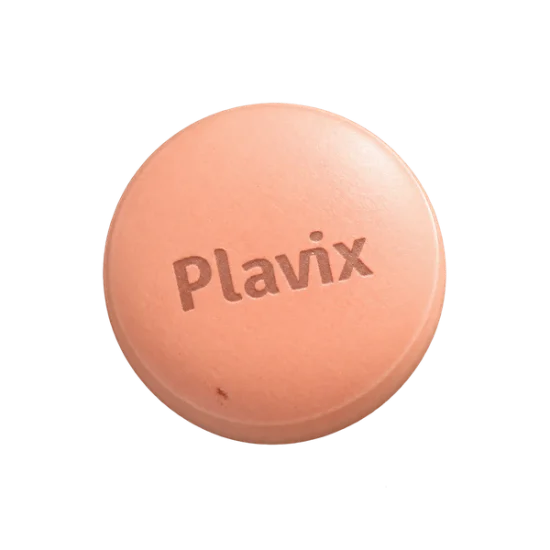
Plavix
Active ingredient: Clopidogrel
Delivery: from 4 days
- Worldwide Delivery4-7 business days
- Quality GuaranteedOnly original products
- Bonus pillsSave up to 80%
- 24/7 SupportOur team of pharmacists is available 24/7 to help you
Clopidogrel, the active ingredient in Plavix, reduces platelet clumping that can form harmful arterial clots. Plavix is prescribed for adults after selected heart, brain, or blood-vessel events to lower the risk of another heart attack or ischaemic stroke.
Product information
Plavix contains clopidogrel bisulfate, which supplies clopidogrel, an antiplatelet medicine and P2Y12 platelet inhibitor.
How it affects the body
Clopidogrel is a prodrug. This means the tablet itself must be converted by the body into an active metabolite before it can inhibit the P2Y12 platelet receptor. CYP2C19 is one of the enzymes involved in this activation process.
Once activated, clopidogrel binds to the platelet P2Y12 receptor and reduces signalling that supports platelet aggregation. Platelets affected by the drug remain less responsive for their lifespan, so the antiplatelet effect lasts beyond the time when the tablet is present in the bloodstream.
Some people activate clopidogrel less efficiently because of genetic differences in CYP2C19. Certain medicines can also interfere with activation. The CPIC pharmacogenetic guidance supports clinician-led consideration of CYP2C19 results in selected high-risk situations [2].
Genetic testing is not a routine self-test for every person taking Plavix. It may be considered after a high-risk coronary event, after treatment failure, or when a cardiologist is choosing between antiplatelet strategies.
Ingredients
Plavix contains clopidogrel bisulfate, which supplies clopidogrel, an antiplatelet medicine and P2Y12 platelet inhibitor. It helps prevent platelet-driven blood clots; it does not dissolve a clot that has already formed. The FDA prescribing information describes its use in acute coronary syndrome, recent myocardial infarction, recent ischaemic stroke, and established peripheral arterial disease [1].
Active Ingredient and Drug Class
Clopidogrel belongs to the thienopyridine group of antiplatelet medicines. After activation in the body, it blocks the platelet P2Y12 receptor. This reduces platelet aggregation, meaning the process in which platelets stick together and form an early plug at a damaged blood vessel.
Antiplatelet treatment differs from anticoagulant treatment. Antiplatelets act mainly on platelet activity, while anticoagulants reduce the activity of clotting proteins in the blood. Both approaches can increase bleeding risk, but they are selected for different cardiovascular diagnoses.
Platelet Inhibition and Clot Prevention
Plavix is used for blood clot prevention in conditions where platelets may contribute to an arterial blockage. The choice of treatment depends on the diagnosis, previous procedures, bleeding history, kidney and liver function, and other medicines.
Reduced platelet activity creates a clinical trade-off. It may lower the chance of an arterial clot, while a cut, injury, or internal bleed may take longer to stop.
Dosage and administration
Plavix Dosage and Administration
The amount and frequency of Plavix depend on the purpose of treatment and are agreed with a doctor or pharmacist. Some cardiovascular situations involve a clinician-directed loading treatment, followed by regular maintenance use. The duration and any combination with aspirin are diagnosis-specific.
- Take the prescribed tablet by mouth at the scheduled time.
- Keep doses consistent from day to day.
- Swallow the tablet as directed by the prescriber.
- Do not double the next dose after forgetting one.
- Do not change the dose or stop treatment without clinical instructions.
- A loading dose should only be taken when specifically prescribed.
A missed dose requires attention to timing. If it is remembered close to the next scheduled dose, the missed tablet is generally skipped rather than doubled; the prescription instructions take priority.
Regular Use and Missed Doses
Feeling well does not mean the underlying cardiovascular risk has disappeared. Stopping clopidogrel can allow platelet activity to recover and may raise the risk of a heart attack or stent-related clot in some patients.
Taking an extra tablet to compensate for a missed dose can increase bleeding risk. If several doses have been missed, the prescriber or pharmacist should advise on the next step rather than the patient restarting with a larger amount.
When not to use it
Active pathological bleeding, such as a current stomach ulcer bleed or intracranial haemorrhage, is a clear reason Plavix may be unsuitable. The FDA’s 2022 prescribing information also identifies hypersensitivity to clopidogrel or its components as a contraindication.
When this is not for you
NOT for you if you have active pathological bleeding, a recent intracranial haemorrhage, or a serious allergy to clopidogrel; seek prescriber advice before use.
Possible side effects
Plavix Side Effects and Bleeding Risks
The most relevant adverse effect of Plavix is increased bleeding tendency. Easier bruising, nosebleeds, bleeding from the gums, or bleeding that takes longer to stop can occur because platelets are less able to form an early plug.
Common reportable effects include:
- Bruising without a clear injury
- Recurrent or prolonged nosebleeds
- Blood in urine
- Heavier-than-usual menstrual bleeding
- Bleeding from the gums
- Persistent stomach discomfort or symptoms of gastrointestinal bleeding
- Skin rash or itching
A small bruise is not always an emergency. Persistent bleeding still deserves prompt clinical advice, and treatment should not be stopped independently.
Serious Bleeding and Allergic Reactions
Seek emergency care for black, tar-like stools; vomiting blood; coughing blood; severe or sudden headache; fainting; unusual weakness; confusion; or bleeding that will not stop with firm pressure. Internal bleeding may not be visible at first.
A serious allergic reaction can cause facial, lip, tongue, or throat swelling, wheezing, difficulty breathing, widespread blistering rash, or collapse. These symptoms require emergency services.
Therapeutic indications
Plavix Uses in Cardiovascular Disease
Clopidogrel may be prescribed after a heart attack, acute coronary syndrome, ischaemic stroke, or transient ischaemic attack (TIA), and for established peripheral arterial disease. It can also form part of treatment for coronary artery disease or angina-related cardiovascular risk when a prescriber considers platelet inhibition appropriate.
Plavix reduces the chance of future clot-related events. It does not repair damaged heart muscle or brain tissue, relieve every form of chest pain, or treat a haemorrhagic stroke. Sudden chest pressure, facial weakness, speech difficulty, or one-sided numbness requires emergency assessment rather than an extra tablet.
Coronary Conditions and Heart Attack Prevention
Some patients receive clopidogrel with aspirin after acute coronary syndrome or coronary stenting. This dual antiplatelet approach is used for a clinician-defined period, because the benefit of preventing a stent-related or coronary clot must be balanced against bleeding.
Angina is a symptom of reduced blood flow to heart muscle. Plavix does not act as an immediate treatment for an angina attack. Its role is longer-term prevention when the underlying cardiovascular condition creates a platelet-related risk.
Ischaemic Stroke and TIA Risk Reduction
Stroke type matters. Clopidogrel may be used after an ischaemic stroke or TIA, while a haemorrhagic stroke requires a different medical approach. A TIA can be brief, but it remains an urgent warning of possible future stroke.
Do not take an extra dose after new neurological symptoms. Emergency services should assess sudden weakness, confusion, trouble speaking, severe dizziness, or loss of vision.
Comparison
Plavix Compared with Other Antithrombotic Treatments
Plavix and aspirin are antiplatelet medicines. Warfarin and heparin are anticoagulants, which act mainly on clotting proteins. Thrombolytics actively dissolve selected clots and are generally used in urgent hospital care.
| Treatment | Main target and clinical role | Main limitation |
|---|---|---|
| Plavix | P2Y12 platelet inhibition for selected arterial clot risks | Bleeding risk and CYP2C19-dependent activation |
| Aspirin | Platelet inhibition, often used alone or with another antiplatelet | Gastrointestinal and other bleeding |
| Warfarin or heparin | Anticoagulation for conditions involving clotting-protein activity | Monitoring, interactions, and bleeding risk |
The best option depends on the clot mechanism, diagnosis, urgency, kidney or liver factors, planned procedures, and bleeding history. Plavix is not a direct replacement for warfarin, heparin, or a thrombolytic.
The World Health Organization describes cardiovascular prevention as risk-specific rather than based on one universal antithrombotic choice. A cardiologist may select Plavix when platelet-driven arterial risk is the central concern.
Common mistakes
Several avoidable mistakes can reduce the benefit of blood clot prevention or increase bleeding risk:
- Stopping Plavix after feeling better
- Taking two tablets after a missed dose
- Adding aspirin or ibuprofen without a medication review
- Failing to tell a dentist about clopidogrel
- Taking herbal products without disclosing them
- Assuming a small procedure never requires treatment planning
- Hiding Plavix use after a fall or head injury
- Treating new stroke or chest-pain symptoms with an extra tablet
- Assuming a bruise proves that the medicine should be stopped
What doctors say
In clinical practice, cardiologists often focus first on why Plavix was prescribed, not simply on whether bruising is present. A patient with a recent coronary stent may face a serious clot risk if treatment is interrupted, while another patient with a different diagnosis may have a different duration and combination plan.
A prescriber will usually review aspirin use, anticoagulants, pain medicines, stomach medicines, kidney and liver conditions, previous ulcers, falls, and upcoming procedures. The same tablet can have a different risk-benefit balance in two people with different medical histories.
Common questions
Which diet, exercise, or habits support Plavix treatment?
A heart-supportive diet, regular activity approved for the cardiovascular condition, smoking cessation, blood-pressure control, and diabetes management can support long-term prevention. These habits do not replace clopidogrel, because they do not provide the same P2Y12 platelet inhibition. The American Heart Association’s 2025 prevention guidance supports lifestyle measures alongside prescribed cardiovascular treatment. Avoid activities with a high injury risk until the treating clinician confirms they are suitable.
How soon does Plavix begin to affect platelet activity?
The onset depends on whether a clinician prescribes a loading treatment or regular maintenance therapy. The FDA’s 2022 prescribing information describes different dosing approaches for acute coronary syndrome and longer-term cardiovascular prevention. Patients should not judge the medicine by how they feel, because platelet inhibition is not usually experienced as a noticeable sensation. Never take an extra tablet to make the effect appear sooner.
What happens if Plavix is stopped, and does it need tapering?
Clopidogrel does not usually require a gradual taper in the way some medicines do, but stopping suddenly can raise clot risk in selected patients. NHS guidance published in 2024 advises patients not to stop clopidogrel without speaking with the prescriber. The risk can be serious after coronary stenting or a recent acute coronary event. A planned interruption, when necessary, must include instructions for restarting treatment.
Which condition rules out Plavix?
Active pathological bleeding, such as a current stomach ulcer bleed or intracranial haemorrhage, is a clear reason Plavix may be unsuitable. The FDA’s 2022 prescribing information also identifies hypersensitivity to clopidogrel or its components as a contraindication. A history of bleeding does not automatically rule out treatment, but it requires careful assessment. Prescribers also review liver disease, previous ulcers, low platelet counts, and other bleeding risks.
Can Plavix cause nosebleeds?
Yes. Nosebleeds can occur because clopidogrel reduces platelet activity, which slows the formation of a platelet plug. The NHS clopidogrel information updated in 2024 lists bleeding and bruising among effects that should be monitored. Apply steady pressure to a nosebleed and seek urgent help if bleeding is heavy, recurrent, or difficult to stop. Do not discontinue Plavix independently because of a minor nosebleed.
How long does one Plavix dose keep working?
The antiplatelet effect lasts beyond the time clopidogrel remains in the bloodstream because it affects the P2Y12 receptor irreversibly on exposed platelets. The FDA’s 2022 prescribing information explains that platelet function returns as new platelets are produced after treatment is stopped. This does not mean a missed dose is harmless or that doses can be taken irregularly. The prescribed daily schedule remains important for continuous blood clot prevention.
What should I do after a missed Plavix dose?
Take the missed dose only according to the prescription instructions and how close it is to the next scheduled dose. The NHS guidance updated in 2024 advises against taking two doses together to compensate. If several doses were missed, contact the prescriber or pharmacist for a specific plan. Do not use an extra tablet as a replacement for medical advice.
Do you offer anonymous delivery?
Your order will be securely packed and shipped within 24 hours. This is exactly what your package will look like (images of an actual item sent). It has the size and look of a regular private letter (24x11x0.7 cm) and its contents cannot be seen.
Sources
- U.S. Food and Drug Administration (2022). PLAVIX (clopidogrel bisulfate) Prescribing Information.
- Clinical Pharmacogenetics Implementation Consortium (2022). CPIC Guideline for CYP2C19 Genotype and Clopidogrel Therapy.