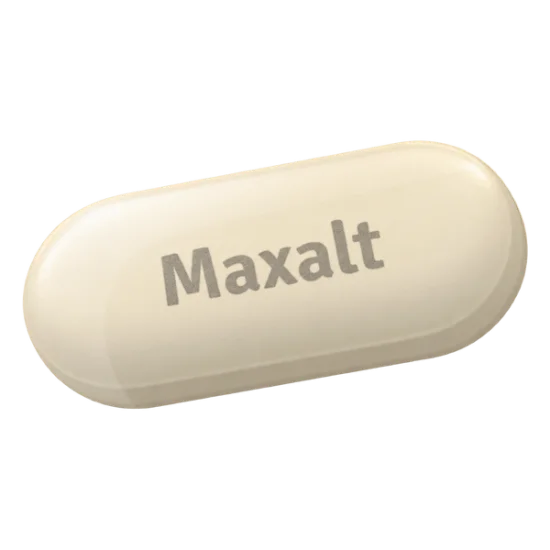
Maxalt
Active ingredient: Rizatriptan
Delivery: from 4 days
- Worldwide Delivery4-7 business days
- Quality GuaranteedOnly original products
- Bonus pillsSave up to 80%
- 24/7 SupportOur team of pharmacists is available 24/7 to help you
Rizatriptan, the active ingredient of Maxalt, is a selective triptan for the acute treatment of migraine attacks in adults. Maxalt helps relieve migraine pain and related symptoms by acting on serotonin receptors involved in cranial blood-vessel changes and pain signalling. It is taken during an attack rather than as a daily preventive treatment.
Product information
Maxalt tablets contain rizatriptan, supplied as rizatriptan benzoate. Rizatriptan belongs to the triptan class, a group of medicines designed for acute migraine treatment. Triptans target migraine mechanisms more specifically than ordinary pain relievers.
Active Ingredient and Drug Class
Rizatriptan is a selective serotonin 5-HT1 receptor agonist. In plain terms, it activates serotonin receptors involved in the migraine pathway.
Approved Therapeutic Role
Maxalt may relieve the headache phase of migraine and associated symptoms such as nausea, sensitivity to light and sensitivity to sound. It does not treat every type of head pain.
How it affects the body
Rizatriptan is a selective serotonin 5-HT1 agonist. It acts on receptors in cranial blood vessels and on trigeminal pain pathways involved in migraine. The result is constriction of certain dilated cranial vessels and reduced release of inflammatory neuropeptides linked with migraine pain.
Migraine involves more than a blood-vessel change. Trigeminal nerve activity can promote neurogenic inflammation around pain-sensitive structures. Rizatriptan reduces this signalling, which can ease headache pain and accompanying symptoms.
Serotonin Receptor Activity
Maxalt is not a serotonin antidepressant. Its action is focused on 5-HT1B and 5-HT1D receptors associated with migraine biology. The medicine does not prevent every future attack, so frequent migraines may require a separate preventive plan.
The EMA describes triptans as medicines acting on serotonin receptors involved in migraine attacks [2].
Ingredients
Maxalt tablets contain rizatriptan, supplied as rizatriptan benzoate. Rizatriptan belongs to the triptan class, a group of medicines designed for acute migraine treatment. Triptans target migraine mechanisms more specifically than ordinary pain relievers.
Maxalt is prescribed for an established migraine attack, including migraine with or without aura. It is not intended for routine prevention or for every undiagnosed headache. The product is associated with rizatriptan treatment, while the benzoate is the salt form used to provide the active medicine.
Active Ingredient and Drug Class
Rizatriptan is a selective serotonin 5-HT1 receptor agonist. In plain terms, it activates serotonin receptors involved in the migraine pathway. Maxalt is taken orally as a tablet.
The medicine is used for acute migraine attacks rather than continuous headache control. A clinician may consider the patient’s age, attack pattern, cardiovascular history, kidney function, liver function and other medicines before selecting the dose.
The FDA prescribing information describes rizatriptan as an acute treatment for migraine attacks with or without aura [1].
Dosage and administration
Maxalt is taken by mouth. The dose is decided individually, taking age, other medicines and health conditions into account.
- The prescribed adult dose is selected for the individual patient.
- A second dose may be permitted after the interval specified by the prescriber.
- The total amount taken in 24 hours must remain within the prescribed limit.
- Do not take extra tablets because the first dose has not worked quickly.
- Do not combine Maxalt with another triptan or an ergotamine medicine.
- Food is permitted, although a meal can affect how quickly oral rizatriptan is absorbed.
- If a dose is missed, do not take a catch-up dose after the attack has passed.
Patients taking propranolol, or those with kidney or liver disease, may need a different regimen. Age and other medicines can also change the appropriate amount. The prescribing directions for the individual patient take priority.
A common mistake is treating the 24-hour limit as a target. It is a ceiling, not a dose that should automatically be reached.
The Maxalt product described here is an oral tablet intended to be swallowed. Take it with water unless the prescribed directions state otherwise. Do not crush, chew or split a tablet unless the specific tablet formulation permits this.
Food does not make rizatriptan ineffective. A meal may delay the onset of absorption, so some patients notice a slower response after eating. The medicine should still be used according to the prescribed timing.
Orally disintegrating rizatriptan formulations are administered differently from swallowed tablets. They dissolve on the tongue and are designed for people who have difficulty swallowing during a migraine attack. A melt formulation should not be treated as interchangeable with every standard tablet presentation.
When not to use it
Maxalt should not be used in people with conditions such as:
- Coronary artery disease or coronary artery spasm
- Previous stroke or transient ischaemic attack
- Peripheral vascular disease
- Uncontrolled high blood pressure
- Certain serious heart-rhythm disorders
- Significant cardiovascular disease identified during clinical assessment
Maxalt should not be used with another triptan or with ergotamine-containing treatment during the restricted interval. MAO inhibitors can alter rizatriptan exposure. Linezolid is a prescription antibiotic with monoamine oxidase activity and requires explicit interaction screening.
The WHO identifies migraine as a neurological disorder that may require both acute and preventive treatment strategies, depending on attack frequency and disability [3].
When this is not for you
This medication is not for you if you have an allergy to rizatriptan or any previous serious reaction to the medicine.
Smoking, diabetes, high blood pressure, obesity and a strong family history of heart disease can increase cardiovascular risk. These factors matter before a triptan is prescribed, especially when the patient has never used one before.
A first severe headache or a new neurological pattern needs diagnosis before repeated Maxalt treatment. The same applies to headache accompanied by weakness, confusion, fever, neck stiffness or sudden visual loss.
Significant liver or kidney impairment can alter rizatriptan exposure and may require a different dose or a different medicine. Tell the prescriber about all known allergies and medical conditions.
Possible side effects
Common tolerability effects include dizziness, sleepiness, nausea, vomiting, weakness, unusual sensations and palpitations. Migraine itself can also cause nausea and vomiting, so the timing of symptoms matters. Most short-lived effects occur near the treatment period and settle as the medicine leaves the body.
Dizziness or drowsiness can affect driving, cycling and work with machinery. Wait until you know how Maxalt affects you before performing activities that require quick reactions.
Common Tolerability Effects
Rizatriptan may cause:
- Dizziness or light-headedness
- Sleepiness or fatigue
- Nausea or vomiting
- Tingling or altered sensation
- Warmth or flushing
- Throat or neck sensations
- Palpitations or a feeling of a faster heartbeat
Serious Cardiovascular and Allergic Reactions
Seek urgent medical help for chest pressure, severe shortness of breath, fainting, marked or irregular heartbeat, facial or throat swelling, wheezing or widespread hives. These symptoms can represent a serious cardiovascular or allergic reaction.
Severe agitation, confusion, fever, sweating, tremor, muscle stiffness or loss of coordination can indicate serotonin toxicity, especially when Maxalt is combined with medicines that affect serotonin. This combination requires prompt medical attention.
Medication Overuse Headache
Frequent use of acute migraine medicines can contribute to medication-overuse headache. The pattern may involve headaches becoming more frequent, less predictable or harder to control.
Record headache days and Maxalt-use days rather than relying on memory. A rising number of treatment days is a reason for clinical review and may indicate the need for preventive migraine management.

Therapeutic indications
Maxalt is prescribed for an established migraine attack, including migraine with or without aura.
Maxalt may relieve the headache phase of migraine and associated symptoms such as nausea, sensitivity to light and sensitivity to sound. It does not treat every type of head pain.
Migraine With and Without Aura
Maxalt may be used when the headache phase of migraine begins, whether the attack was preceded by aura or occurred without aura. Aura alone is not the same as the painful headache phase. Follow the prescribed timing for treatment.
A first aura, a prolonged aura or new neurological symptoms should not be assumed to be a familiar migraine pattern. Urgent assessment is appropriate for sudden weakness, difficulty speaking, fainting, severe visual loss or an unusually intense headache.
Comparison
Maxalt, sumatriptan and zolmitriptan are triptans used for acute migraine treatment. They differ in active ingredient, individual response, available formulations and interaction details. No triptan is universally best for every patient.
| Medicine | Active ingredient and clinical distinction |
|---|---|
| Maxalt | Rizatriptan; oral triptan for acute migraine treatment |
| Sumatriptan | Sumatriptan; available in several administration forms and subject to triptan interaction rules |
| Zolmitriptan | Zolmitriptan; another oral triptan with its own dosing and interaction profile |
A person who responds well to one triptan may respond less well to another. Cardiovascular screening and non-combination rules apply across the class. Onset claims should not be used alone to choose treatment.
Generic rizatriptan contains the same active ingredient as Maxalt, though inactive ingredients, tablet appearance and available formulations may differ. A switch should follow a prescriber’s or pharmacist’s medication plan rather than being assumed automatically.
Common mistakes
Patients commonly make these errors:
- Taking Maxalt for an undiagnosed headache that is different from their usual migraine.
- Repeating a dose too soon because relief has not appeared.
- Exceeding the 20 mg maximum in 24 hours.
- Taking Maxalt after another triptan during the restricted interval.
- Driving while dizzy, sleepy or light-headed.
- Omitting information about heart disease, stroke, high blood pressure or interacting medicines.
- Using acute treatment repeatedly without recording headache days.
A headache diary does not need to be complicated. Note the date, duration, aura, symptoms, Maxalt dose, relief and unwanted effects. A clinician can use this pattern to assess medication-overuse headache or the need for preventive treatment.
The medicine may not work for every attack. Persistent pain after the permitted treatment should prompt medical review rather than repeated unsupervised dosing.
What doctors say
In clinical practice, doctors usually assess three points before continuing a triptan: whether the attacks are genuinely migraine, whether cardiovascular risks have been screened and whether the treatment pattern is staying within safe limits.
A useful response is relief of headache and associated symptoms without troublesome adverse effects. A partial response, repeated need for extra doses, increasing attack frequency or new neurological symptoms changes the clinical decision.
Doctors also pay attention to treatment timing. Taking a triptan during the established headache phase may be more useful than taking it during aura alone, while the correct timing can vary with the patient’s migraine pattern and prescription directions.
The main limitation is that Maxalt treats an attack but does not remove the underlying tendency to develop migraine. Frequent attacks may need preventive treatment, trigger assessment and review of sleep, hydration, hormones, stress and other individual factors.
Common questions
Can Maxalt be used during pregnancy or breastfeeding?
Pregnancy and breastfeeding require an individual risk assessment before rizatriptan is used. FDA safety information available in 2023 describes the need to weigh maternal migraine treatment against pregnancy-related considerations. The EMA and MOHAP should be considered alongside the prescriber’s assessment of the patient’s history, pregnancy stage and alternatives. Do not start repeated Maxalt treatment during pregnancy without a clinician-directed plan. A prescriber can also review the product information for the specific formulation.
Is Maxalt suitable for people under 18?
Use in people under 18 is not automatically appropriate. FDA information from 2023 does not establish the same routine adult approach for every younger patient, and paediatric migraine requires age-specific assessment. The WHO recognises migraine in children and adolescents, but treatment depends on age, weight, diagnosis and other conditions. A child or teenager should receive rizatriptan only when specifically prescribed.
Can alcohol be used while taking Maxalt?
Alcohol can worsen dizziness, sleepiness, dehydration and migraine symptoms. NHS clinical information reviewed in 2024 advises caution with activities affected by dizziness when using triptans. The EMA also identifies dizziness and somnolence as relevant tolerability concerns for rizatriptan. Avoid alcohol around treatment if it makes symptoms worse or affects alertness.
Can Maxalt be taken with food or on an empty stomach?
Maxalt tablets may be taken with food or on an empty stomach. FDA prescribing information from 2023 indicates that food can affect the speed of absorption without making rizatriptan ineffective. A meal may therefore change how quickly relief begins. Follow the prescribed timing and do not take an extra tablet because a meal delayed the response.
Can Maxalt be combined with antidepressants or supplements?
Rizatriptan requires interaction screening when used with MAO inhibitors, linezolid or medicines that affect serotonin. FDA information from 2023 describes serotonin-toxicity concerns with combinations that increase serotonergic activity. The EMA also recognises the need to review interacting medicines before treatment. Do not assume that every antidepressant or herbal supplement is prohibited, but provide a complete medication list before use.
What is the best time of day to take Maxalt?
There is no universal best time of day because Maxalt is used for an acute migraine attack rather than on a fixed morning or evening schedule. NICE guidance updated in 2024 supports treating migraine according to the individual attack plan and clinical assessment. Take the prescribed dose when the established migraine headache begins, within the timing instructions given for your treatment. Do not take it routinely on symptom-free days.
Does Maxalt cause dizziness?
Dizziness is a recognised adverse effect of rizatriptan. FDA prescribing information from 2023 lists dizziness and somnolence among reported effects, while the EMA includes these symptoms in its safety information. Avoid driving or operating machinery until you know how Maxalt affects you. Severe dizziness with fainting, chest discomfort, breathlessness or an irregular heartbeat needs urgent medical assessment.
Do you offer anonymous delivery?
Your order will be securely packed and shipped within 24 hours. This is exactly what your package will look like (images of an actual item sent). It has the size and look of a regular private letter (24x11x0.7 cm) and its contents cannot be seen.
Sources
- U.S. Food and Drug Administration (2023). Maxalt (rizatriptan benzoate) Prescribing Information
- European Medicines Agency (2019). Summary of Product Characteristics (SmPC) — rizatriptan
- World Health Organization (2023). Headache disorders